Tuesday, January 29, 2008

New Feature: Ask a WWII Airman


Okay, time for a new feature. Is there any nagging question you've always wondered about the men who flew the heavy bombers over Europe in WWII? Well, here's your chance to get an answer. Leave your question here and I'll forward it to some of my buddies who flew in WWII. When I get an answer, I'll post it.

But it only works if people ask the questions. Don't be shy. What do you want to know? My friends are all experts on survival in the cold deadly skies and they are guys who I have a feeling will have good answers.

Any questions?

Sunday, January 27, 2008

Thoughts--Random but Heartfelt

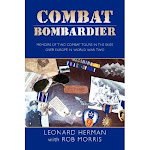
Nearly ten years ago, I decided to write a book about something that interested me--the World War Two bombers and the men who flew them. I didn't have much of an idea of where to go with the book, and made several false starts before hitting on a way that felt right to me. As I worked, I met one WWII vet after another, and most generously and trustingly opened up to me, invited me into their homes, let me spend the night on a spare bed, showed me their old photos, and most important, shared their lives with me. Five years of hard travel and even harder writing and the book was done.

And the amazing thing is--if the book had never sold a single copy, it was all worth it, and I'd do it again in a heartbeat.

I set out to write a book. I ended up making friends for life. I cherish each one of these men more than any material possession that the earth could give me.

Which is why the past few years have been hard. When all your best friends are in their eighties, and many are pushing ninety, you spend a lot of time saying goodbye.

I spend time each week talking to my best friend, who happens to be 91. He has dementia and possibly Alzheimers. Our conversations are filled with laughter, reflections on the pain of aging, and stories of the past. My friend flew two tours of duty over Europe, first as a B-17 bombardier (he saw his pilot die and nearly died himself on the same mission), and then as a bombardier on A-26 Intruders and B-26 Marauders.

Over a year ago, I helped him put together his memoirs. They are poignant, often funny, and at times very sad. When I read it, I can hear him remembering it all over again. He does this less each week.

In June, I'm going to go see him where he lives in the deep south. It will be a joyous meeting. We met once before, some years ago, in New Jersey, for only a few brief minutes. This time, we'll take our time.

I set out to write a book. Instead, I learned what's important in life.

How lucky is that?

Today is World Holocaust Day---Lest We Forget


Today the world is marking Holocaust Memorial Day, held each year on the anniversary of the day Auschwitz-Birkenau, the Nazi extermination camp, was liberated in 1945.

Lest we forget......

Eighth Air Force Facts


These were sent to me by 95th Bomb Group bombardier Maurice Rockett, and come from the Eighth Air Force News.

Eighth Air Force Comparative Statistics:

At its peak, the Eighth Air Force had over 200,000 officers and men.

At its peak, it numbered 40.5 heavy bomb groups, 15 fighter groups, and 2 Photo Recon Groups operating from bases in the United Kingdom.

At this peak strength, a typical mission consisted of 1,400 heavy bombers escorted by 800 fighters, consuming 3,500,000 gallons of fuel, expending 250,000 rounds of .50 caliber ammunition, destroying 25 German aircraft in the air and on the ground for the loss of 4 United States fighters and five bombers, and dropping 3,300 tons of bombs on enemy targets while on visual missions. 40% fell within one thousand feet of assigned Mean Point of Impacts and 75% within 2,000 feet.


Behing these figures are the combat crews and fighter pilots who fought in the skies.

46,456 became casualties.
14 were awarded the Medal of Honor.
220 were awarded the Distinguished Service Cross.
11 were awarded Distinguished Service Medals.
207 were awarded Legions of Merit.
817 were awarded Silver Stars.
41,497 were awarded Distinguished Service Crosses.
478 were awarded Soldier's Medals.
6,845 were awarded Purple Hearts.
122,705 were awarded Air Medals.
2,972 were awarded Bronze Stars.
28,000 were awarded POW Medals.

In addition, none could have flown without the maintainence and ground personnel, who repaired 59,644 battle-damaged aircraft, loaded 732,231 tons of bombs, and linked and loaded 99,256,341 rounds of ammunition.

Incidentally, Maurice has a Purple Heart, an Air Medal, and a Distinguished Flying Cross. He lost an eye on a mission aboard a B-17. Maurice is one of my top guys for sending good information for this blog. Thanks, Maurice!


Maurice Rockett upon graduation from Bombardier school.

Last German World War I Veteran, Erich Kaestner, Passes Away in Cologne, Germany

Last German soldier to fight in WWI dies without fanfare
Three British WWI Vets Survive

By ALAN HALL - Daily Mail, London

Last updated at 23:20pm on 23rd January 2008


The last German veteran of the First World War has died without fanfare or recognition at his home in Hanover aged 107.


An undated photograph of Mr. Kaestner, taken some years after WWI.

Erich Kaestner's passing went unrecorded on New Year's Day and was revealed only in a remembrance notice published by his family.

The death of the infantryman who later became a judge means that there are only four Great War veterans left from the major powers of Europe - three British and one French.

Kaestner was a middle class boy who answered his country's call in July 1918.

German commanders had committed an exhausted army to one last push on the Western Front to try to break the Allied defences. Called Operation Michael and launched in April that year, it failed.

As a member of Sonderbattalion Hauck, a group of highly-trained recruits named after a prominent commander in the Imperial German Army, Kaestner served in the ranks trying to halt the Allies as they pushed the Germans back, causing great losses.

In November 1918, shortly before the Armistice and before Kaiser Wilhelm II went into exile in Holland, Kaestner was among a number of troops reviewed by him.


Surviving WW1 veterans: William Stone, 107, Harry Patch, 109, and Henry Allingham


He ended the war back in Germany and became a lawyer.

The death notice says he was a retired judge and had earned the Lower Saxony Cross of Merit for distinguished public service.

The German army's Military Research Institute was unable to shed more light on his military career.

"In Germany such an event doesn't have the same kind of significance as it does in other countries," said institute spokesman Bernhard Chiari.

"Any form of commemoration of military events is seen as problematic here.

"Our veterans only take part in public ceremonies when they are invited abroad to join commemorative events with veterans from other countries.

"World War I is seen as part of a historical line that led to World War II."

Two million Germans were killed in WW1 and Britain and her empire lost a million men


Three of the last four survivors are British - front-line soldier Harry Patch, 109, Royal Naval stoker William Stone, 107, and Royal Naval Air Service flier Henry Allingham, 111.


The fourth survivor is Frenchman Lazarre Ponticelli, 110.

Mr Patch was a 'Tommy' who fought at the bloodbath of Passchendaele - a battle that cost more than 400,000 Allied and German lives with a gain measured in yards.


The veteran, who lives in Wells in Somerset and who served with the Duke of Cornwall's Light Infantry, last year visited the site where his trench was located when the battle began in 1917.


Henry Allingham is Britain's last survivor of the Battle of Jutland, the sea clash between the British and German fleets that cost 7,000 sailors their lives.


He flew as a spotter for the battleships in a Sopwith plane.

Mr Stone was a stoker who was called up but was still in training when the war ended.

He served on many warships in the war, surviving sinkings and other near-misses.

While Erich Kaestner's passing went un-noticed, the death last Sunday of Louis de Cazenave, the last-but-one French survivor, made headlines around the world.

He took part in the Battle of the Somme and died aged 110 at his home in Brioude in central France.

He was fiercely anti-war, having served in the slaughter on the Chemin des Dames on the front - a place where men bleated like sheep as they filed into the trenches because they knew they were lambs being led to the slaughter.


"His death is an occasion for all of us to think of the 1.4million French who sacrificed their lives during this conflict, for the 4.5million wounded, for the 8.5million mobilised," President Nicolas Sarkozy said in a tribute.


De Cazenave is survived by Ponticelli, a French Foreign Legion veteran wounded in the Battle of the Frontiers when the Germans stormed into France in 1914.


He was discharged from the Legion and later joined the Italian Army in 1915 and was wounded again fighting the Austrians who were on Germany's side.


Hit in the head by artillery, he astonishingly survived.

My own observation: How sad that Germany does not honor its veterans. However, I certainly understand their reluctance, based on the terrible history of World War Two.

Sunday, January 20, 2008

RAF Legend, 'Great Escaper' Jimmy James Flies Final Mission


I received notice from Marilyn Walton that the great RAF pilot and Great Escaper Jimmy James passed away in England recently. I am pasting his obituary from the London Times here.

From The Times
January 18, 2008

Squadron Leader Jimmy James
RAF pilot who was awarded the Military Cross for his part in the Great Escape from Stalag Luft III


“Jimmy” James was one of 76 officers who escaped from Stalag Luft III on the night of March 24, 1944, and was fortunate not to be among the 50 executed on Hitler’s order on recapture. He was sent instead to Sachsenhausen concentration camp from where he tunnelled his way out, only to be caught again after 14 days on the run.

He was the second pilot of a Wellington bomber shot down south of Rotterdam in June 1940. Initially hopeful that German security would not be too tight, the Netherlands having been overrun only in May, he planned to acquire a boat to sail back to England, or at least get him far enough from the coast to be picked up. A Dutch farmer gave him food and shelter but for one night only as his presence was certain to become known: the local police arrested him before he could move on.

After routine interrogation by Luftwaffe intelligence officers and the Gestapo, he began his life as a prisoner in Stalag Luft I at Barth on the Baltic. This seemed ideal for boarding a neutral merchant vessel to Sweden, but the tunnel through which James and others dug to get out of the camp was discovered by a sentry on the night of the escape before it was his turn to go through.

A year later, in September 1941, he and a fellow prisoner dug a tunnel from an incinerator to a point beyond the perimeter and made detailed plans to walk to Sassnitz and take the ferry to Sweden. Unfortunately, although the pair snatched the opportunity of the camp lighting failing unexpectedly to crawl from their hut to the incinerator, a prowler sentry appeared as James was about to move from under the hut. His companion got clean away and reached home via Sweden.

Although involved in several other escape plans, none reached fruition before he was moved to Stalag Luft III at Sagan in Silesia.

In January 1944 he joined the group in Stalag Luft III planning what eventually became the Great Escape through a 365-foot tunnel nicknamed “Harry”. (“Tom” and “Dick” had been put on hold as Harry seemed more promising and demanded a large work force). Harry had been partly dug some months previously but closed when many of those working on it were moved to Poland. It had a vertical shaft below a stove platform in one of the huts, and James was put in charge of a team dispersing the sand dug from the tunnel at night by placing it in the space under the camp theatre.

After several alarms and near-discovery the tunnel was completed to the exit point in a wood beyond the perimeter wire and no fewer than 200 camp inmates were selected to make the break attempt on the night of March 24. The first 30 were chosen by the escape committee because they spoke fluent German and so had the best chance of making a “home run”. The next 70 were chosen from those who had worked on the tunnel, and the final 100 were names taken from a hat of 500 volunteers.

James was allocated place number 39. His plan was to join a group of 12 who, with papers indicating they were foreign workers at a local wood mill going home on leave, would travel the first leg of their journey by train, heading for Czechoslovakia where they hoped to make contact with the local resistance. All went well for them until, having made one successful train journey, they attempted another only to be arrested at the station by police alerted by the mass escape. A sentry had stumbled on the mouth of the escape shaft at 5am on March 25, by when 76 officers had got away. At first Hitler ordered all those recaptured to be shot but allegedly due to pressure from Goering, who feared reprisals against Luftwaffe prisoners in Allied hands, the order was changed to “more than half to be shot”.

Of the 76 who escaped, three — a Dutchman and two Norwegians — reached freedom, the rest were recaptured. Fifty were executed, 15 returned to Stalag Luft III and eight, James among them, sent to Sachsenhausen concentration camp, after the Gestapo had interrogated him about the escape at its infamous Albrechtstrasse headquarters in Berlin. On arrival in Sachsenhausen, 17 miles north of Berlin, he met up with the other seven who had escaped from Stalag Luft III. They were not put in the main compound of the camp but in a Sonderlager (special camp) along one side. To their surprise, this lent itself to construction of a tunnel from below the corner of a hut a mere 120 feet to a point beyond the outer wire fence.

Using a table knife with a serrated edge, James and Flight Lieutenant Sydney Dowse dug the tunnel while the rest of the group kept watch. They were joined by Lieutenant-Colonel John “Mad Jack” Churchill, captured during a commando raid on the Dalmatian island of Brac, whom the Germans suspected of being related to the Prime Minister. By the second week of September 1944, the tunnel had reached the point for the exit shaft to be made. It was decided that six officers would escape in pairs, Jack Churchill and James travelling together.

The breakout was made on the night of September 23. Churchill led the way northwards to the Berlin-Rostock railway, which they followed on foot for three successive nights before jumping a goods train bound for Neustrelitz. After two nights’ rest in woods, eating vegetables taken from a station garden, they continued on foot along the railway until bumping into a group of Russian prisoners. Fed by the Russians, the pair continued on foot for eight more days until they were captured while sleeping by three members of the Volkssturm — the German equivalent of the Home Guard. They were back in Sachsenhausen by the next day — locked in the Zellenbau cell block, regarded as death row, where they stayed until February 1945.

The final saga of Jimmy James’s war involved a laborious journey with other hostage-prisoners via Flossenbürg and Dachau concentration camps to the Austrian Tyrol, where they were finally liberated by the American Army on May 3, 1945.

Bertram Arthur James was born in India where his father was a tea-planter. He was educated at King’s School, Canterbury, and worked in British Columbia from 1934 until volunteering for flying training with the RAF in 1939. He was awarded the MC and mentioned in dispatches for his escape attempts.

Granted a regular commission in the RAF he retired as a squadron leader in 1958. He was the general-secretary of the Foreign and Commonwealth Office-sponsored Great Britain-USSR Association, until joining the Diplomatic Service in 1964. He held posts in Africa, Western and Eastern Europe and London. He retired in 1975, when he visited Sachsenhausen with Jack Churchill and other survivors. He served as the British representative on the International Sachsenhausen Committee until shortly before his death.

He is survived by his wife, Madge, whom he married in 1946. Their son predeceased him.

Squadron Leader B. A. “Jimmy” James, MC, survivor of the Great Escape from Stalag Luft III, was born on April 17, 1915. He died on January 18, 2008, aged 92

Air Corps Civil Rights--The Tuskegee Airmen


Since tomorrow is Martin Luther King, Jr. Day, I thought it fitting to have a short story on the segregation of the armed forces in World War Two, and some black ambassadors who helped prove that a black American could fly and fight as well as any white man. These ambassadors were the Tuskegee Airmen.

Starting in 1941, the Army Air Force began training black Americans as military pilots in Alabama at Tuskegee's Moton Field and Tuskegee Army Air Field.

They flew escort and combat missions throughout the Mediterranean Theater of Operations, and were collectively known as the Tuskegee Airmen. They flew 200 missions as heavy bomber escort without losing a single bomber to enemy fighter opposition. The 332nd Fighter Group comprised the largest fighter unit in the 15th Air Force.

The Tuskegee airmen flew over 300 missions for the 15th Air Force, distinguishing themselves in battle and crushing the stereotype that black men could not fly.

On the eve of Martin Luther King Jr.'s birthday, I salute these brave Americans.

The combat record of the Tuskegee Airmen
speaks for itself:

· Over 15,000 combat sorties (including 6000+ for the 99th prior to July '44)
· 111 German airplanes destroyed in the air, another 150 on the ground
· 950 railcars, trucks, and other motor vehicles destroyed
· 1 destroyer sunk by P-47 machine gun fire (Lt. Pierson's flight)
· Sixty-six pilots killed in action or accidents
· Thirty-two pilots downed and captured, POWs
· NO U.S. bombers lost while being escorted by the 332nd, a unique achievement
· 150 Distinguished Flying Crosses earned
· 744 Air Medals
· 8 Purple Hearts
· 14 Bronze Stars

Statistics and Decorations of the
Tuskegee Airmen
Total Missions:
12th Air Force
1267
Total Missions:
15th Air Force
311
Total Sorties:
12th Air Force
6381
Total Sorties:
15th Air Force
9152
Combat Tally
Aircraft (aerial)
136
Aircraft (ground)
237
Barges &
Boats
40
Box cars, Other
Rolling Stock
619
Buildings
Factories
23
Gun Emplacements
3
Enemy
Warships
1
Horse Drawn
Vehicles
115
Motor
Transports
87
Power
Transformers
5
Locomotives
Trains
126
Radar
Installations
9
Tanks on Flat Cars
7
Oil & Ammunition
Dumps
2
Decorations
Legion of Merit
1
Silver Star
1
Soldier Medal
2
Flying Cross
150
Purple Heart
8
Bronze Star
14
Air Medal
744
Air Victories
Aircraft used by U.S. pilots is indicated in BLUE
Enemy Aircaft destruction is indicated in RED
Lt. Clarence Allen (99th FS)
1 FW 190 (Destroyed, shared with Capt. Baugh Jan. 27, 1944 P-40)
Capt. Lee Archer (302nd FS)
1 ME 109 (Destroyed July 18, 1944 P-51);
1 ME 109 (Destroyed July 20, 1944 P-51);
3 ME 109s (Destroyed Oct. 12, 1944 P-51)
Lt. Willie Ashley Jr. (99th FS)
1 FW 190 (Damaged June 9, 1943 P-40);
1 ME 109 (Probable June 18, 1943 P-40);
1 FW 190 (Destroyed Jan. 27,1944 P-40)
Lt. Charles Bailey (99th FS)
1 FW 190 (Destroyed Jan. 27, 1944 P-40);
1 FW 190 (Destroyed July 18, 1944 P-51)
Capt. Howard Baugh (99th FS)
1 FW 190 (Destroyed, shared with Lieut. Allen Jan. 27, 1944 P-40)
1 FW 190 (Damaged Jan. 27, 1944 P-40)
Lt. Rual Bell (100th FS)
1 FW 190 (Destroyed March 31, 1945 P-51)
F/O Charles Brantley (100th FS)
1ME 262 Jet (Destroyed March 24,1945 P-51)
Lt. Thomas Braswell (99th FS)
1 FW 190 (Destroyed March 31, 1945 P-51)
Capt. Roscoe Brown (100th SF)
1 ME 262 Jet (Destroyed March 24, 1945 P-51);
1 FW 190 (Destroyed March 31, 1945 P-51)
Lt. John Briggs (100th FS)
1 ME 109 (Destroyed August 24, 1944 P-51)
Lt. Milton Brooks (302nd FS)
1 ME 109 (Destroyed Oct. 12, 1944 P-51)
Capt. Charles Bussey (302nd FS)
1 ME 109 (Destroyed June 9, 1944 P-47)
Maj William Campbell (99th FS)
2 ME 109s (Destroyed March 31, 1945 P-51)
Note: Some records indicate 1 kill.
Lt. Carl Carey (301st FS)
2 ME 109s (Destroyed April 1, 1945 P-51)
Capt. Lemuel Custis (99th)
1 FW 190 (Destroyed Jan. 27, 1944 P-40)
Capt. Alfonso Davis (99th FS)
1 Macchi 205 (Destroyed July 16, 1944 P-51)
Lt. John Davis (99th FS)
1 ME 109 (Destroyed March 31, 1945 P-51)
Lt. Robert Diez (99th FS)
1 FW 190 (Destroyed Jan. 27, 1944 P-40);
1 FW 190 (DestroyedJan. 28,1944 P-40)
Capt. Elwood Driver (99th FS)
1 FW 190 (Shared Probable Jan. 27, 1944 P-40);
l FW 190 (Destroyed Feb. 5, 1944 P-40)
Lt. Wilson Eagleson (99th FS)
1 FW 190 (Destroyed Jan. 27, 1944 P-40);
1 FW 190 (Destroyed July 20, 1944 P-40)
Lt. John Edwards (301st FS)
2 ME 109s (Destroyed April 1, 1945 P-51)
Capt. Joseph Elsberry (301st FS)
3 FW 190s (Destroyed July 12, 1944 P-51);
1 FW 190 (Probable July 12, 1944 P-51);
l ME 109 (Destroyed July 20, 1944 P-51)
F/0 James Fischer (301st FS)
1 FW 190 (Destroyed April 1, 1945 P-51);
2 FW 190s (Damaged April 1, 1945 P-51);
Lt. Frederick Funderburg (301st FS)
2 ME 109s (Destroyed June 9, 1944 P-47)
Maj. Edward Gleed (302nd & 301st FS)
2 FW 190s (Destroyed July 27, 1944 P-51);
1 FW 190s (Damaged July 27, 1944 P-51)
Note: Some sources indicates 3 kill 2 Probables
Lt. Alfred Gorham (301st FS)
2 FW190s (Destroyed July 27, 1944 P-51)
Capt. Claude Govan (301st FS)
1 ME 109 (Destroyed July 27, 1944 P-51)
Capt. George Gray (99th FS FS)
1 ME 109 (Destroyed Oct. 4, 1944 P-51)
Lt. William Green, Jr (302nd FS)
1 Macchi 205 (Destroyed July 16, 1944 P-47);
1 ME 109 (Destroyed, shared with Lieut. Groves July 26, 1944 P-51);
1 HE 111 (Destroyed Oct.12, 1944 P-51)
Lt. Weldon Groves (302nd FS)
1 JU 88 (Damaged March 17, 1943 P-39);
1 ME 109 (Destroyed, shared with Lieut. Green July 26, 1944 P-51);
1 ME 109 (Damaged Oct. 12, 1944 P-51)
Capt. Charles Hall (99th FS)
1 FW 190 (Destroyed July 2, 1943 P-40);
1 ME 109 (Destroyed Jan. 28,1944 P-40);
1 FW 190 (Destroyed Jan. 28,1944 P-40)
Lt. James Hall, Jr. (99th FS)
1 ME 109 (Destroyed March 31,1945 P-51)
Lt. Richard Hall (100th FS)
1 ME 109 (Destroyed July 27, 1944 P-51)
Lt. Milton Hayes (99th FS)
I FW 109 (Destroyed, shared with Capt. Perry Oct. 4, 1944 P-51)
Lt. Richard Harder (99th FS)
2 ME 262 Jets (Damaged March 24, 1945 P-51)
F/O William Hill (302nd FS)
1 ME 109 (Destroyed August 23, 44 P-51)
Lt. Jack Holsclaw (100th FS)
2 ME 109s (Destroyed July 18, 1944 P-51)
Lt. Heber Houston (99th FS)
1 ME 109s (Damaged July 26, 1944 P-51)
Capt. Freddie Hutchins (302nd FS)
1 ME 109 (Destroyed July 26, 1944 P-51);
1 ME 109 (Probable July 26, 1944 P-51)
Capt. Leonard Jackson (99th FS)
1 FW 190 (Destroyed Feb. 7,1944 P-40);
1 ME 109 (Destroyed July 26,1944 P-51);
1 ME 109 (Destroyed July 27,1944 P-51)
Capt. Melvin Jackson (302nd FS)
1 ME 109 (Destroyed June 9,1944 P-47)
Lt. Thomas Jefferson (301st FS)
2 ME 109 (Destroyed April 26,1945 P-51)
Lt. Carl Johnson (100th FS)
1 ME 109 (Destroyed August 6,1944 P-51);
1 Re 2001 (Destroyed July 30, 1944 P-51)
Lt. Langdon Johnson (100th FS)
1 ME 109 (Destroyed July 20, 1944 P-51)
Lt. Felix Kirkpatrick, Jr. (302nd FS)
1 ME 109 (Destroyed July 27, 1944 P-51)
Lt. Earl Lane (100th FS)
1 ME 262 Jet (Destroyed March 24, 1945 P-51);
1 ME 109 (Destroyed March 31, 1945 P-51)
Lt. Jimmie Lanham (301st FS)
1 ME 109 (Destroyed April 15, 1945 P-51);
1 ME 109 (Probable April 15, 1945 P-51);
1 ME 109 (Destroyed April 26, 1944 P-51)
Lt. Herman Lawson (99th FS)
1 FW 190 (Probable July 8, 1943 P-40);
Lt. Walter Lawson (99th FS)
1 ME 109 (Damaged July 2, 1943 P-40);
2 ME 109s (Both Probables July 2, 1943 P-40)
Capt. Clarence Lester (100th FS)
3 ME 109s (Destroyed July 18, 1944 P-51)
F/0 John Lyle (100th FS)
1 ME 109 (Destroyed March 31, 1944 P-51)
Lt. Walter Manning (301st FS)
1 FW 190 (Damaged July 27, 1944 P-51);
1 ME 109 (Destroyed April 1, 1945 P-51)
Capt. Armour McDaniel (301st FS)
1 ME 109 (Destroyed July 20, 1944 P-51)
Capt. Charles McGee (302nd FS)
1 FW 190 (Destroyed Oct. 4, 1944 P-51)
Lt. William Melton (302nd FS)
1 JU-88 (Unclaimed Victory - Damaged, later confirm destroyed March. 28, 1944 P-
39);
2 FW 190s (Unclaimed Victory - Destroyed around Aug. of 1944 P-51)
Lt. Clinton Mills (99th FS)
1 FW 190 (Destroyed Feb. 7, 1944 P-40)
Lt. Harold Morris (301st FS)
1 ME 109 (Destroyed April 1, 1945 P-51)
Capt. Walter Palmer (100th FS)
1 ME 109 (Destroyed July 18, 1944 P-51)
Capt. Henry Perry (99th FS)
1 FW 190 (Damaged Feb. 27, 1944 P-40);
1 ME 109 (Damaged July 18, 1944 P-40);
1 ME 109 (Destroyed,shared with Lieut. Milton Hayes Oct. 4, 1944 P-51)
Lt. William Price III (301st FS)
1 ME 109 (Destroyed Feb.1, 1945 P-51)
Capt. Wendell Pruitt (302nd FS)
1 ME 109 (Destroyed June 9, 1944) P-47);
1 ME 109 (Destroyed Oct.12,1944 P-51);
1 HE 111 (Destroyed Oct. 12, 1944 P-51)
Lt. George Rhodes Jr. (100th FS)
1 FW190 (Destroyed August 12, 1944 P-51);
1 ME 109 (Destroyed Oct. 4, 1944 P-51)
Lt. Daniel Rich (99th FS)
1 ME 109 (Destroyed March 31, 1945 P-51)
Maj. George Roberts (99th FS)
1 FW 190 (Damaged Jan. 27, 1944 P-40) Note: Fellow 99th pilots witnessed 2 kills by
G. Roberts, but he never claimed them.
Capt. Leon Roberts (99th FS)
1 FW 190 (Destroyed Jan. 27, 1944 P-40)
Lt. Roger Romine (302nd FS)
1 ME 109 (Destroyed July 18, 1944 P-51);
1 ME 109 (Destroyed July 26, 1944 P-51);
1 ME 109 (Destroyed Oct. 12, 1944 P-51);
1 ME 109 (Damaged Oct. 12, 1944 P-51)
Lt. Harold Sawyer (301st FS)
2 FW 190s (Destroyed July 12, 1944 P-51)
Note: This was the first kill using the P-51 for the 332nd FG. It was a hand-me-down
olive colored P-51 from the 31st FG
1 ME 109 (Destroyed July 25, 1944 P-51);
2 ME 109s (Damaged July 25, 1944 P-51)
Lt. Richard Simons (100th FS)
1 ME 109 (Destroyed April 26, 1945 P-51)
Capt. Lewis Smith (99th FS)
1 ME 109 (Destroyed Jan. 27, 1944 P-40)
Lt. Luther Smith, Jr. (302nd FS)
1 ME 109 (Destroyed July 17,1944 P-51);
1 HE 111 (Destroyed Oct. 12, 1944 P-51)
Lt. Robert Smith (302nd FS)
1 ME 109 (Destroyed July 17, 1944 P-51)
Lt. Roy Spenser (302nd FS)
1 JU-88 (Damaged March. 28, 1944 P-39)
Lt. Harry Stewart, Jr. (301st FS)
3 ME 109s (Destroyed April 1, 1945 P-51)
Capt. Edward Thomas (99th FS)
1 ME 109 (Destroyed Oct. 4, 1944 P-51);
1 ME 262 Jet (Destroyed, shared victory March 24, 1945 P-51)
Lt. William Thomas (302nd FS)
1 FW 190 (Destroyed August 24, 1944 P-51)
Capt. Edward Toppins (99th FS)
1 FW 190 (Destroyed Jan. 27, 1944 P-51);
1 FW 190 (Destroyed July 18, 1944 P-51);
1 ME 109 (Destroyed July 20, 1944 P-51);
1 ME 109 (Destroyed July 26, 1944 P-51);
1 ME 109 (Probable July 26, 1944 P-51)
Lt. Hugh Warner (302nd FS)
l ME 109 Destroyed July 18, 1944 P-51)
Lt. Span Watson (99th FS)
2 ME 109s (Damaged June 16, 1943 P-40)
Capt. Luke Weathers (302nd FS)
1 ME 109 (Destroyed, shared with Lt..William Hill August 23, 1944 P-51);
2 ME 109s (Destroyed Nov. 16, 1944 P-51)
Lt. Shelby Westbrook (99th FS)
1 ME 109 (Destroyed Oct. 4, 1944 P-51)
Capt. Charles White (301st FS)
2 ME 109s (Destroyed April 1, 1945 P-51)
Capt. Hugh White (99th FS)
1 ME 109 (Destroyed March 31,1945 P-51)
Lt. Robert Wiggins (301st FS)
1 ME 109 (Damaged June 9, 1945 P-47)
Lt. Lawrence Wilkens (302nd FS)
1 JU 88 (Damaged Macrh. 14, 1944 P-39);
1 ME 109 (Destroyed July 17, 1944 P-51)
Lt. Robert W. Williams (100th FS)
2 FW 190s (Destroyed March 31, 1945 P-51);
1 FW 190 (Damaged March 31, 1945 P-51)
Lt. Bertram Wilson Jr. (100th FS)
1 FW 109 (Destroyed March 31, 1945 P-51);
1 FW 109 (Damaged March 31, 1945 P-51)
Lt. Gwynne Pierson and Capt. Wendell Pruitt
Shared honor of destroying a enemy Italian destroyer displying German flag
(July 25, 1944 P-47s
Combat Record
Combat Record
through June 9, 1945:
Destroyed Damaged TOTAL
Aircraft (aerial) 111 25 136
Aircraft (ground) 150 123 273
Barges & Boats 16 24 40
Box Cars & Other Rolling Stock 58 561 619
Buildings & Factories 0 23 23
Gun Emplacements 3 0 3
Destroyers 1 0 1
Horse Drawn Vehicles 15 100 115
Motor Transports 6 81 87
Power Transformers 3 2 5
Locomotives 57 69 126
Radar Installations 1 8 9
Tanks on Flat Cars 0 7 7
Oil & Ammunition Dumps 2 0 2
Total Combat Missions:
Total Missions 12th Air Force 1,267
Total Missions 15th Air Force 311
Total Sorties 12th Air Force 6,381
Total Sorties 15th Air Force 9,152
Grand Total Missions 1,578
Grand Total Sorties 15,533
Total Number of Pilots Sent
Overseas 450
Total Number of Pilots
Graduated at Tuskegee 992
TOTAL KILLED IN ACTION 66
Awards:
Legion of Merit 1
Silver Star 1
Soldier Medal 2
Purple Heart 8
Distinguished Flying Cross 95
Bronze Star 14
Air Medal and Clusters 744
Final total of Distinguished
Flying Crosses awarded to Negro
pilots estimated at
150
Source: Lonely Eagles by Robert A. Rose
99th Fighter Sqn
Edward L.
Toppins, 4
Charles B. Hall, 3
Leonard M.
Jackson, 3
100th Fighter Sqn
Raul W. Bell, 1
Charles V.
Brantley, 1
John F. Briggs, 1
Roscoe C. Browne,
301st Fighter Sqn
Joseph D. Elsberry, 3
Carl E. Corey, 2
John E. Edwards, 2
James H. Fischer, 1
Frederick D.
302nd Fighter Sqn
Lee A. Archer, 4.5
Wendell O. Pruitt, 3
Roger Romaine, 3
Milton P. Brooks, 1
Charles W. Bussey, 1
Clarence W.
Allen, 0.5
Willie Ashley, Jr.,
1
Charles P. Bailey,
1
Howard L. Baugh,
1
Thomas P.
Braswell, 1
William A.
Campbell, 1
John W. Davis, 1
Lemuel L. Curtis,
1
Robert W. Dier, 2
Elwood T. Driver,
1
Wilson V.
Eagleson, 2
James L. Hall, 1
Clinton B. Mills, 1
Daniel L. Rich, 1
Leon C. Roberts, 1
Lewis C. Smith, 1
Hugh J. White, 1
2
Richard W. Hall, 1
Jack D. Hosclaw, 2
Carl E. Johnson, 1
Langdon E.
Johnson, 1
Earl R. Lane, 2
Clarence D. Lester,
2
John H. Lyle, 1
Walter J.A. Palmer,
1
George M. Rhodes,
Jr., 1
Robert W.
Williams, 2
Bertram W.
Wilson, Jr. 1
Funderburg, 2
Alfred M. Gorham, 2
Claude Govan, 1
Thomas W. Jefferson,
2
Jimmy Lanham, 2
Armour G.
McDaniel, 1
Walter P. Manning, 1
Harold M. Morris, 1
William S. Price, III,
1
Harold E. Sawyer, 1
Harry T. Stewart, 2
Charles L. White, 2
Edward C. Gleed, 2
William W. Green, Jr., 2
Weldon K. Groves, 1
William L. Hill, 1
Freddie F. Hutchins, 1
Melvin T. Jackson, 1
Felix J. Kirkpatrick, 1
Charles E. McGee, 1
Luther H. Smith, Jr., 2
Robert H. Smith, 2
William H. Thomas, 1
Hugh S. Warner, 1
Luke J. Weather, Jr., 2
Laurence D. Wilkins, 1