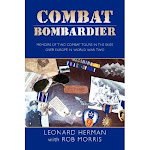
My friend Maurice Rockett, a B-17 bombardier with the 95th, sent me this article today. It's very good.
Story by Walt Sehnert
Monday, March 23, 2009
One of the most closely guarded secrets of World War II was the Norden bombsight. This was the invention of a Dutch-born American, Carl Norden, who had come to the United States in 1904, after completing his University studies in Switzerland. In the United States, Norden went to work for the Sperry Corp., which was developing gyroscopes for improving ship stabilization for the U.S. Navy. Carl Norden and Elmer Sperry really never got along with each other very well. Sometime after World War I, Norden left the Sperry organization to start his own company, with the idea of making bombsights for the U.S. Navy. But with the advent of World War II Norden's bombsights were adopted by the United States Army Air Corps, and later the USAF. It was here, with the growing importance of the big bombers in the war that the Norden bombsight gained its exalted reputation, not just for the United States, but all countries of the world that were engaged in World War II, both Allies and Axis forces.
The Norden bombsight was just one step, but a giant step, in the evolution of bombsights, dating back to World War I, when pilots used a simple crosshairs telescope to help bring their bombs close to their designated target.
The World War II Norden bombsight consisted of two main parts, a stabilizer and a sight-head. The stabilizer was a platform that was kept level by a series of gyroscopes, and was attached to the plane's autopilot, so that during the last stages of a bombing run the stabilizer actually flew the plane, to keep it on target.
The sight-head consisted of three primary parts. 1. A primitive analog computer calculated the impact point of the bombs, relative to the flight pattern of the plane. 2. A small telescope lined up the target initially. 3. A series of electric motors and gyroscopes automatically moved the bombsight so that the target remained stationary in the bombsight as the plane moved closer to its target. Proponents of the Norden bombsight claimed that it was foolproof. Using that bombsight, (they said), a bombardier "could drop a bomb into a pickle barrel from 20,000 feet."
By the end of World War II 45,000 USAAF and USAF bombardiers had been checked out on the Norden bombsight, and all of them had signed papers promising to protect the bombsight with their lives, and to destroy it if they were forced to abandon their plane.
The ritual of using a Norden bombsight at air bases was rigid, (including its use at the McCook Army Air base). The bombsight was kept in a fortified storage building. When it was to be used, it would be brought out of the storage building by a contingent of armed guards. It was kept in a zippered bag until it was put in its place aboard a bomber (B-25, B-17, or B-29), by the plane's bombardier. Returning from a mission, the bombsight was again placed in its zippered bag, removed from the plane under the watch of an armed guard, and deposited back into its storage building, which was also under a constant guard.
Despite the claims of the bombsight's champions, the Norden bombsight was less than foolproof. Tests on the bombsight were made in level flying aircraft, flying at constant airspeeds. In combat, bombers flying bombing runs in enemy territory under these conditions were very likely to be shot down. Instead, U.S. pilots preferred to approach their targets in a gliding path, which made the planes harder to hit with anti-aircraft fire, but meant a great deal of manual input by the bombardiers, and a much greater risk of human error -- thus a great variance in the dependability of the bombsight in pinpointing the bomb's target.
Never the less, stealing the secrets of the Norden bombsight was a top priority of German spies during the war, even though it has since been learned that the Germans already knew the basic secrets of the bomb sight, but had decided that it did not fit in with their preferred method of bombing -- dive bombing attacks as opposed to high altitude precision bombing, which the Americans preferred.
Capturing the secrets of the Norden bombsight was the primary goal of the largest German spy ring to be successfully captured and prosecuted by the Americans during World War II.
Nineteen-year old Herman Lang was a German engineer who immigrated to the United States in 1927 (and became a U.S. citizen in 1939). He took a job with Carl Norden and was soon assigned work making gyroscopes for the Norden bombsight. He apparently did good work, and learned the intricacies of the bombsight very well. On a trip to Germany in 1938 Lang had a meeting with Herman Goering, Hitler's right hand man, and negotiated a deal (for $3,000) to reproduce from memory his recollections of the bombsight. During World War II German bombsights used many of the same principles of the American Norden device.
Upon his return to the United States and the Norden Corp., Lang continued to feed sensitive military information to the Germans through his involvement with the Duquesne Spy Ring, a key German spy organization, under the leadership of Fritz Joubert Duquesne, a U.S. citizen from South Africa, whose hatred of the British had led him to spy for the Germans in both World War I and World War II.
FBI agents were aware of the Duquesne organization in the U.S. for some time. For nearly two years, from 1939-1941, the FBI ran a covert radio station for the organization, intercepting information from Germany and controlling messages sent from the German spies in the U.S.
In late 1941, through the use of a "double agent," Wm. Seybold, the FBI was able to capture, jail, and convict 32 German agents of the Duquesne Spy Ring. (Herman Lang was in this group and received a sentence of 18 years, and then was deported to Germany). FBI head, J. Edgar Hoover, called this the greatest roundup of enemy agents in the history of the U.S.
It was, indeed, an important coup. After the war a former German spy stated that the capture of the Duquesne group had effectively destroyed the German spy network in the United States. (The story of the Duquesne Spy Ring was the theme of the 1945 Academy Award film "House on 92nd Street".)
Toward the end of World War II the weaknesses of the Norden bombsight were overcome somewhat when the USAF adopted the principle of "saturation bombing" of a target and pinpoint accuracy was of less importance for our bombers. Never the less, throughout the war the United States put great effort in protecting the secrets of the Norden bombsight, making the bombsight the greatest "non-secret" of the war. Some have described the extreme efforts of the U.S. in preserving the secrets of the Norden bombsight during World War II as a gigantic smokescreen, designed to divert attention away from the "Manhattan Project," the making of and finally using the atomic bomb, which certainly did end World War II. Atomic Bomb secrets, though the subject of many rumors, were largely preserved by the U.S. to the end of World War II.
It is probably fitting that Tom Ferebee, the bombardier aboard the Enola Gay, used a Norden bombsight to drop the atomic bomb on Hiroshima, thus combining the two great secrets of the war, the Norden Bombsight and the Atomic Bomb, to end World War II.
Source: Various Internet sources, Dale Cotton of the "Friends of the McCook Airbase."
One of the most closely guarded secrets of World War II was the Norden bombsight. This was the invention of a Dutch-born American, Carl Norden, who had come to the United States in 1904, after completing his University studies in Switzerland. In the United States, Norden went to work for the Sperry Corp., which was developing gyroscopes for improving ship stabilization for the U.S. Navy. Carl Norden and Elmer Sperry really never got along with each other very well. Sometime after World War I, Norden left the Sperry organization to start his own company, with the idea of making bombsights for the U.S. Navy. But with the advent of World War II Norden's bombsights were adopted by the United States Army Air Corps, and later the USAF. It was here, with the growing importance of the big bombers in the war that the Norden bombsight gained its exalted reputation, not just for the United States, but all countries of the world that were engaged in World War II, both Allies and Axis forces.
The Norden bombsight was just one step, but a giant step, in the evolution of bombsights, dating back to World War I, when pilots used a simple crosshairs telescope to help bring their bombs close to their designated target.
The World War II Norden bombsight consisted of two main parts, a stabilizer and a sight-head. The stabilizer was a platform that was kept level by a series of gyroscopes, and was attached to the plane's autopilot, so that during the last stages of a bombing run the stabilizer actually flew the plane, to keep it on target.
The sight-head consisted of three primary parts. 1. A primitive analog computer calculated the impact point of the bombs, relative to the flight pattern of the plane. 2. A small telescope lined up the target initially. 3. A series of electric motors and gyroscopes automatically moved the bombsight so that the target remained stationary in the bombsight as the plane moved closer to its target. Proponents of the Norden bombsight claimed that it was foolproof. Using that bombsight, (they said), a bombardier "could drop a bomb into a pickle barrel from 20,000 feet."
By the end of World War II 45,000 USAAF and USAF bombardiers had been checked out on the Norden bombsight, and all of them had signed papers promising to protect the bombsight with their lives, and to destroy it if they were forced to abandon their plane.
The ritual of using a Norden bombsight at air bases was rigid, (including its use at the McCook Army Air base). The bombsight was kept in a fortified storage building. When it was to be used, it would be brought out of the storage building by a contingent of armed guards. It was kept in a zippered bag until it was put in its place aboard a bomber (B-25, B-17, or B-29), by the plane's bombardier. Returning from a mission, the bombsight was again placed in its zippered bag, removed from the plane under the watch of an armed guard, and deposited back into its storage building, which was also under a constant guard.
Despite the claims of the bombsight's champions, the Norden bombsight was less than foolproof. Tests on the bombsight were made in level flying aircraft, flying at constant airspeeds. In combat, bombers flying bombing runs in enemy territory under these conditions were very likely to be shot down. Instead, U.S. pilots preferred to approach their targets in a gliding path, which made the planes harder to hit with anti-aircraft fire, but meant a great deal of manual input by the bombardiers, and a much greater risk of human error -- thus a great variance in the dependability of the bombsight in pinpointing the bomb's target.
Never the less, stealing the secrets of the Norden bombsight was a top priority of German spies during the war, even though it has since been learned that the Germans already knew the basic secrets of the bomb sight, but had decided that it did not fit in with their preferred method of bombing -- dive bombing attacks as opposed to high altitude precision bombing, which the Americans preferred.
Capturing the secrets of the Norden bombsight was the primary goal of the largest German spy ring to be successfully captured and prosecuted by the Americans during World War II.
Nineteen-year old Herman Lang was a German engineer who immigrated to the United States in 1927 (and became a U.S. citizen in 1939). He took a job with Carl Norden and was soon assigned work making gyroscopes for the Norden bombsight. He apparently did good work, and learned the intricacies of the bombsight very well. On a trip to Germany in 1938 Lang had a meeting with Herman Goering, Hitler's right hand man, and negotiated a deal (for $3,000) to reproduce from memory his recollections of the bombsight. During World War II German bombsights used many of the same principles of the American Norden device.
Upon his return to the United States and the Norden Corp., Lang continued to feed sensitive military information to the Germans through his involvement with the Duquesne Spy Ring, a key German spy organization, under the leadership of Fritz Joubert Duquesne, a U.S. citizen from South Africa, whose hatred of the British had led him to spy for the Germans in both World War I and World War II.
FBI agents were aware of the Duquesne organization in the U.S. for some time. For nearly two years, from 1939-1941, the FBI ran a covert radio station for the organization, intercepting information from Germany and controlling messages sent from the German spies in the U.S.
In late 1941, through the use of a "double agent," Wm. Seybold, the FBI was able to capture, jail, and convict 32 German agents of the Duquesne Spy Ring. (Herman Lang was in this group and received a sentence of 18 years, and then was deported to Germany). FBI head, J. Edgar Hoover, called this the greatest roundup of enemy agents in the history of the U.S.
It was, indeed, an important coup. After the war a former German spy stated that the capture of the Duquesne group had effectively destroyed the German spy network in the United States. (The story of the Duquesne Spy Ring was the theme of the 1945 Academy Award film "House on 92nd Street".)
Toward the end of World War II the weaknesses of the Norden bombsight were overcome somewhat when the USAF adopted the principle of "saturation bombing" of a target and pinpoint accuracy was of less importance for our bombers. Never the less, throughout the war the United States put great effort in protecting the secrets of the Norden bombsight, making the bombsight the greatest "non-secret" of the war. Some have described the extreme efforts of the U.S. in preserving the secrets of the Norden bombsight during World War II as a gigantic smokescreen, designed to divert attention away from the "Manhattan Project," the making of and finally using the atomic bomb, which certainly did end World War II. Atomic Bomb secrets, though the subject of many rumors, were largely preserved by the U.S. to the end of World War II.
It is probably fitting that Tom Ferebee, the bombardier aboard the Enola Gay, used a Norden bombsight to drop the atomic bomb on Hiroshima, thus combining the two great secrets of the war, the Norden Bombsight and the Atomic Bomb, to end World War II.
Source: Various Internet sources, Dale Cotton of the "Friends of the McCook Airbase."