Showing posts with label book reviews. Show all posts

Sunday, August 15, 2010

Book Review: 'Last Roll Call: The Adventures of a B-17 Tailgunner, 15th Air Force, 97th Bomb Group, Amendola Italy"


I had the good fortune recently to read a book by B-17 tailgunner Kenneth S. Tucker, who flew with the 97th Bomb Group in the 15th Air Force in World War Two. I also had the pleasure of communicating with his daughter, Wanda Tucker Goodwin, who helped her dad write the book. Though I've read literally hundreds of books about the air was in Europe, I was surprised at how much interesting information was in Mr. Tucker's book that I did not know about.


Most memoirs of the European air war are about the Eighth Air Force, which during and after the war garnered the lion's share of the publicity. A large part of this was simple proximity to those who reported the war. London was teeming with reporters looking for a good story, and the Eighth's bomber boys were only a few miles away. On the other hand, there were very few reporters willing or able to go to Amendola, Italy, and live in the alternately muddy and dusty tent cities there, surrounded by the crushing poverty of the Italian natives.


Mr Tucker covers his life from his early days as a son of a fisherman in Florida, though his training, and into combat in the flak-filled skies over Europe. His writing is clear, unembellished, and honest. He develops the personalities of the various members of the crew as he recounts the missions, so that one feels like one knows the young men on the crew. He also tells of his visits to various places of interest on his time off, such as Pompeii and the Isle of Capri.


Many readers of WWII memoirs are on the lookout for signed memoirs. Here is your chance to pick one up. Follow the link below to Ken's website, and put in an order for a copy of this book. He'll personalize it and autograph it. 186 pages. Soft cover trade paperback. Illustrated with black and white photographs.


Click link below or phone 850-624-8081.


Monday, November 23, 2009

Astute Review of Untold Valor

Posting this review by Jan Peczkis of my book on Amazon. Mr. Peczkis is that rare Amazon reviewer who actually reads the book and then is provides some synthesis and analysis. Thank you, Mr. Peczkis.

Click here for Mr. Peczkis' review, which focuses on German treatment of Jewish American POWs.

Sunday, November 8, 2009

Rite of Passage Book Review


Recently finished a great book about WWII bomber crews entitled Rite of Passage: A Teenager's Chronicle of Combat and Captivity in Nazi Germany, and highly recommend it to readers with an interest in WWII bomber crews and the Prisoner of War experience. Click on the hyperlinked book title for more information. Readers can get a signed copy for the same price as a traditional trade paperback in a bookstore. Would make a great birthday, Christmas or Chanukah gift for the WWII aviation buff on your list. My review follows:


"Many books have been written about bomber crew experiences in the skies over Europe in World War Two. And many have been written about the Prisoner of War experiences of those crewmen who were shot from the skies. What makes Ray Matheny's book stand out is the meticulous attention to detail and his eye for description. Matheny's book was originally popular in Germany in translation, and only recently has it become available to the American reading public. Matheny was a top turret gunner/flight engineer aboard the B-17 'Deacon's Sinners' of the Eighth Air Force's 384th Bomb Group. Graced with dollops of mechanical and technical aptitude, he is so trusted by his pilot and copilot that he becomes, in essence, a third pilot on the crew, flying the plane for hours while the pilots catch up on their sleep. He describes the interpersonal dynamics of his crew in great detail, and I found this to be fascinating. The pilot, a frustrated fighter pilot wannabe, who takes unnecessary risks with the airplane. The copilot, perhaps justly feeling that he is more qualified and at times resenting Matheny's flying time. Each man on the crew is fleshed out so that the reader can identify with him. This becomes a double-edged sword when the crew is shot down, killing most of the men. And that is where Matheny's adventure takes on a completely new twist, as a prisoner of war in Nazi Germany. Matheny gives the reader an intimate glimpse of POW life, and of the long march near the end of the war that the emaciated POWs make to stay ahead of the advancing Russian Army.

The book, filled with three-dimensional, carefully drawn characters and situations, stands out in the many books I've read over the years in this genre. I cannot recommend it highly enough. A major addition to military aviation history"

Saturday, November 29, 2008

Jack Scoltock's 'The Meltin' Pot' tells the Story of a B-17 and Its Crew


Today in the mail I got a copy of "The Meltin' Pot: From Wreck to Rescue to Recovery" by my friend in Ireland, Jack Scoltock. Jack spent many years researching this book, and it was well worth it. The book tells of the fate of the B-17 Flying Fortress 'The Meltin' Pot' that crashed off the coast of Ireland during WWII. One of the crewmen on that plane was Lee Kessler, and the crew went on to fly missions on a different plane over Europe. Lee was later shot down and became a POW, and this book covers the fate of the crew as well as the plane.

Jack is a diver and chronicles the search for and discovery of the Meltin' Pot, undertaken by divers over the past few years. A documentary is in the works.

When I visited Lee Kessler back in 2003, he was very excited about the work of the Irish divers, and was looking forward to going to Ireland to see the wreck of his old plane for himself. Lee spent several freezing hours in the sea awaiting rescue after the Meltin' Pot went down. Unforunately, Lee passed away in the fall of 2003, without ever realizing his hopes of seeing his old plane again. However, the pilot of the plane, William C. Melton, did have a chance to go to Ireland and see artifacts from his plane before Melton himself passed away June 13, 2008.

I highly recommend this book to anyone with an interest in WWII, the 8th Air Force, the lives of B-17 crews, or deep sea diving. You can order the book here from Amazon.com in the United Kingdom: http://www.amazon.com/Meltin-Pot-Wreck-Rescue-Recovery/dp/0752447254/ref=sr_1_1?ie=UTF8&s=books&qid=1228006425&sr=8-1

I give this book my highest recommendation. Buy it, read it, treasure it.

Saturday, March 15, 2008

Frank Irgang's Etched in Purple Released by Potomac

The Twenty-Ninth Infantry goes ashore on D-Day. Frank was there. He tells about it in his book.


One of my most prized possessions, a signed, First Edition of Etched in Purple, published back in 1949 by Caxton Printers, Caldwell, Idaho. Frank sent me the pristine dust jacket, over fifty years old.
The new edition of Etched in Purple. If I could write one book as good as this, I could die a happy man.

The book I consider to be the greatest memoir of World War Two was released yesterday by Potomac Books. Frank Irgang wrote Etched in Purple shortly after returning from his hellish tour of duty as a medic, and, after attrition killed many of his comrades, regular infantryman in the famed 29th Infantry Division. Frank landed on the Normandy beachhead on D-Day and fougth his way through Europe, through the Battle of the Bulge, before being wounded.
What makes Frank's book so special is that he pulls no punches in relating what happened, from D-Day onwards. One of the most disturbing scenes in the book involves a German woman pouring boiling water on a wounded American soldier, as Frank watches. What would you do?
Frank has become a good friend over the years. I have no qualms admitting that my friend is also one of my heroes and mentors. His book is better than anything I could ever attempt to write. It is, in my opinion and that of Potomac Books, a 're-discovered classic'.
Don't pass this book up. It will change you forever. Frank tells it like it was, and believe me, he also proves that, in the words of General Sherman, 'War is Hell'
Who were the 29th Division? Here are some facts from the net:
Some stats and history on the 29th Division

The 29th Division was reactivated on 3 February 1941 and departed for the United Kingdom on 5 October 1942 where it continued training in Scotland and England from October of 1942 up to June 1944 in preparation for the invasion of France.
Teamed with the
U.S. 1st Infantry Division, the 116th Infantry Regiment of the 29th Division was in the first assault wave to hit the beaches at Normandy on D-Day, 6 June 1944. The division itself landed on Omaha Beach on the same day in the face of intense enemy fire but soon secured the bluff tops and went on to occupy Isigny on 9 June. The division cut across the Elle River and advanced slowly toward St. Lo, fighting bitterly in the Normandy bocage (hedge rows).
After taking St. Lo on
18 July, the division joined in the battle for Vire, capturing that strongly held city on 7 August. Turning west, the 29th took part in the assault on Brest from 25 August to 18 September.
After a short rest, the division moved to defensive positions along the Teveren-Geilenkirchen line in
Germany and maintained those positions through October. (In mid-October the 116th Infantry took part in the fighting at the Aachen Gap.) On 16 November the division began its drive to the Ruhr, blasting its way through Siersdorf, Setterich, Duerboslar, and Bettendorf, reaching the Ruhr by the end of the month.
On
8 December, heavy fighting reduced Juelich Sportplatz and the Hasenfeld Gut. From 8 December 1944 to 23 February 1945, the division held defensive positions along the Ruhr and prepared for the offensive. The attack jumped off across the Ruhr on 23 February and carried the division through Juelich, Broich, Immerath, and Titz to Mönchengladbach on 1 March. The division was out of combat in March, however in early April the 116th Infantry helped mop up in the Ruhr area and on 19 April the division pushed to the Elbe River and held defensive positions until 4 May. Meanwhile, the 175th Infantry Regiment cleared the Kloetze Forest. After VE Day, the division was on military government duty in the Bremen enclave.
The 29th Infantry Division had spent 242 days in combat during campaigns in
Normandy, Northern France, the Rhineland and Central Europe, earning four Distinguished Unit Citations in the process. Two soldiers of the division were awarded the Medal of Honor. Also awarded were 44 DSCs, one DSM, 854 Silver Stars, 17 Legion of Merit, 24 Soldier's Medal and 6,308 Bronze Stars.

The 29th in Popular Culture
In the 1962 film
The Longest Day much of the action of the 29th on Omaha Beach on D-Day is depicted, with assistant division commander Brigadier General Norman Cota portrayed by Robert Mitchum.
Close Combat, part of a Microsoft Series of wargames during the 1990s also portrayed the actions of the 29th Division from Omaha Beach to the capture of St. Lo.

In the 1998 film "
Saving Private Ryan", many of the soldiers seen in the Omaha Beach sequence are from the 29th, identified by their shoulder insignias. Corporal Timothy E.Upham, for instance, is portrayed as a soldier serving with the 29th Infantry Division. Upham was drafted to serve with a squad from the 2nd Rangers. The 29th, along with the 1st Infantry Division, were grouped with a few companies of the 2nd Ranger Battalion to storm Omaha Beach on June 6th, 1944.

Friday, February 8, 2008

Irish Diver Finds Lee Kessler's B-17 'Meltin' Pot'


This writing job never ceases to surprise and fascinate me. A few months ago, I got an email from a fellow writer in Northern Ireland named Jack Scoltock. Jack is a well-known author of children's books in the UK and also a diver. He emailed me to let me know he was finishing up a book about his dives to a sunken B-17 bomber named 'The Meltin' Pot', which sank in the Lough Foyle on the way to England in 1942.

Seamus Carey researched and found the plane.

I was friends with one of the crewmen, a gentleman named Lee Kessler, whom I wrote about in my book Untold Valor. Lee had the dubious distinction of having survived four plane crashes in his Air Corps career. One was stateside during his training as an aerial gunner and it killed the pilot. The second was the dangerous ocean ditching of 'The Meltin' Pot' off the Irish Coast. All aboard survived but spent hours in the frigid waters. The third crash totaled the crew's replacement B-17 after a mission, and the fourth resulted in Lee becoming a POW in Germany. It was during his time as a POW that Lee survived the infamous forced winter march and witnessed a war crime that he turned into an internationally acclaimed piece of Holocaust art.

Jack is putting the finishing touches on a book about the underwater discovery of the Meltin' Pot. I for one am excited to read it. The book is due out in June.

When I visited Lee Kessler at this home in Canton, Ohio some years back, he told me that the plane had been discovered, and he was hoping to fly over to Ireland to meet with the divers who'd found it. Sadly, Lee passed away only a few months after we talked, and never got a chance to see the plane that had carried him and the rest of the crew safely across the Atlantic, only to ditch in the sea.

Jack wrote me: "Did you know that Charles Pappy Grimes, who was on Lee's original crew of Meltin' Pot, played saxophone or relief saxophone for Tommy Dorsey before he was called up. That's why there are 120 Tommy Dorsey records and a record player on board the Meltin' Pot. Yet to be salvaged."

The tentative cover of the book is shown here, and I'm also giving Jack's personal website in case anyone wants to order a book or has a question about the recovery of the aircraft.

Here is the weblink for Jack's writing website: http://www.jackscoltock.com/


The photo above, which I took in Lee's home, shows Lee holding the cover of his wartime scrapbook. If you look closely, you can see a painting of the ditching of the Meltin' Pot near the middle. The book's cover is decorated by paintings depicting Lee's many experiences in the war. It was held shut by a captured German belt and buckle. The belt is blue and white and runs across the bottom of the book, and the buckle is circular and silver at the right of the book.

Monday, December 31, 2007

2 Books of Note


I've picked up a couple of very interesting books in the past two weeks. The first, Down to Earth: A Fighter Pilot's Experiences of Surviving Dunkirk, The Battle of Britain, Dieppe and D-Day, is by Squadron Leader Kenneth Butterworth McGlashan, AFC, with Owen Zupp. I found out about this book during a history discussion on Amazon, and became acquainted with the co-author, Owen Zupp, an Australian pilot for Quantas Airlines who shares my passion for aviation and aviation history. Owen and I traded books by mail. The book was published by Grub Street Press, London in 2007. Owen conducted many interviews with the late Mr. McGlashan to write this outstanding account.


McGlashan started his RAF career in 1939 in a Hawker biplane, and ended it in the jet era of the 1950's. Shot down over the beaches of Dunkirk in heated aerial combat, McGlashan returns to England to fly again. He flies in support of the ill-fated invasion at Dieppe and takes on clandestine night operations before D-Day.


The book is illustrated with photographs spanning Mr. McGlashan's interesting career.


You can buy this book here: http://www.amazon.co.uk/Down-Earth-Fighter-Recounts-Experiences/dp/1904943845/ref=pd_bbs_sr_3?ie=UTF8&s=books&qid=1199121310&sr=8-3. This is from Amazon.uk. The book is not available on US Amazon at this time.


The second book I picked up at a used book store. It is entitled Flying Through the Fire: FIDO--The Fogbusters of World War Two: Freeing the RAF's Airfields from the Fog Menace by Geoffery Williams. This book, published in 1996 by Grange Books, London, chronicles the British attempt to control the fog and low clouds that caused many Allied aircraft to crash upon return to base. Early in the war, many British bombers returned from harrowing missions unable to find their bases, which were completely fog-bound. This took a savage toll on aircraft and aircrew. Winston Churchill prompted the government's Petroleum Warfare Department to develop a cure for this problem, and they came up with FIDO--Fog Investigation and Dispersal Operation. Lines of burners feulled by thousands of gallons of petrol were installed beside runways to literally burn off the fog, thereby allowing aircraft to take off and land safely. Over 100 photos accompany this fascinating book.


And on that note, Happy New Year to all readers. I look forward to many postings in 2008, and will be working on two books in the coming year. First, the 95th Bomb Group history, and second, a sequel to Untold Valor tentatively entitled Untold Valor: Forgotten Stories of Aerial Combat in the Pacific.

Wednesday, December 26, 2007

Christmas Book Winner Chosen


I selected the winner of the Christmas book drawing today. It was fair and scientific. I put the names on pieces of paper and had my son Matt draw the winner. And the winner is...


Les Poitras, of Massachusetts.

Les, get in touch with me about how you want the book signed and inscribed.


My thanks to all who entered. The most distant entry was from India.


Enjoy the book, Les!

Sunday, November 18, 2007

Weblog Recommendation: Pratttown


I came across a great site dealing with WWII aviation history today, after responding to a post. This one is worth checking out regularly. Lots of good articles, with a focus on the B-29 bomber.


Of particular interest to me was the Studs Terkel interview of Paul Tibbetts.


So drop on by Pratttown for a look around: http://www.pratttown.com/

Wednesday, November 14, 2007

WWII D-Day Infantryman Memoir 'Etched in Purple' to be Re-Issued by Potomac Books in April 2008


It is with great excitement that I report that the best infantryman's memoir to come out of World War Two, 'Etched in Purple', by Frank Irgang, will be re-issued by Potomac Books in April of 2008.


If a reader ever wanted to live the life of an American infantryman in Europe, from the D-Day landing to the hedgerows of France to the wintry forests of Germany, this is the book to get. First published by Caxton Press in 1949, the book was the catharsis of a young vet who had seen some of the worst fighting in Europe and then had the guts and the sensitivity to write about it graphically and honestly. This book will change whoever reads it. It changed me.


I invite all my readers to be on the lookout for more information on 'Etched in Purple'. I think it may well be the next 'Band of Brothers', only better.

Sunday, November 11, 2007

Book Recommendation--Harry Patch, WWI Vet


My friend Richard Havers of England recommended this book about one of the men profiled in my previous posting, Harry Patch, who is the last surviving soldier to fight in the trenches in World War One.


Mr Patch, whereever you are, thank you, and you are one amazing guy.


Tuesday, October 16, 2007

Another Hero Passes--Edward Herman---Rescued Concentration Camp Survivors


Ed Herman, left, and Robert Hilliard, Right, saved thousands of displaced persons in Germany at the end of World War Two. Ed passed away yesterday.


I just received the sad news that E. Edward Herman, who with Bob Hilliard helped change US policy towards concentration camp survivors in US-occupied Germany, has passed away.
Ed and Bob's story is told in my book "Untold Valor" as well as in Bob Hilliard's excellent book, 'Surviving the Americans', and in an acclaimed video entitled 'Miracle at St. Ottilien'.

Ed and Bob were Army Air Corps enlisted men in Germany. Bob had been wounded in the Battle of the Bulge and had been transferred into the Air Corps, where he held a job as a reporter for an air base newspaper. Bob was assigned to cover a concert staged by concentration camp survivors shortly after war's end. The concert was held at a former monastery named St. Ottilien, part of which had been converted into a hospital for the Holocaust survivors. At the concert, Bob noticed that most of the people at St. Ottilien still wore their striped concentration camp uniforms, and that nearly all were emaciated and sickly.


He noted that the freed concentration camp survivors, now called Displaced Persons, had no place to go, in most cases. Many were from Jewish ghettos that had been literally wiped off the face of the earth by Nazi pograms. These 'free' people now were kept in camps. Because of the danger of typhus and other communicable diseases, the American armed forces had strung barbed wire around many of the displaced persons camps to prevent the DPs from getting out and infecting the general population. Many DPs were still dying of malnutrition, disease, and neglect. Several had been shot while trying to sneak out of the camps to find food.


Bob returned to the American base and told his good friend, E. Edward Herman. Though he and Ed were privates, they decided they had to do something. And they did. By the time they were done, they had managed to get President Harry Truman to change US policy towards liberated concentration camp survivors. Truman sent a top deputy named Earl Harrison to Germany to investigate the situation firsthand. His report lambasted the treatment of the DPs. President Truman wrote to Eisenhower, saying, in part:


"As matters now stand, we appear to be treating the Jews as the Nazis treated them, except that we do not exterminate them. They are in concentration camps in large numbers under our military guard instead of S.S. troops. One is led to wonder if the German people, seeing this, are not supposing we are following, or at least condoning, Nazi policy."


Both Bob and Ed were threatened with courts-martial for bringing the plight of the DPs to light. They stood fast and did the right thing.


It has been my honor to know these two great Americans for a number of years. Both were of great help to me when I was researching their story. It is a story known to only a small segment of historians, but one which deserves a much wider audience. For this reason, only two weeks ago, I nominated Ed and Bob for induction into the Jewish-American Hall of Fame.


Ed was a wonderful friend and a great man. He lived many exciting events in his life, and was one of the original catalysts behind supplying the new state of Isreal with arms and other material after its creation.

The world is poorer today because he is not in it. However, thousands of Jews and other concentraton camp displaced persons lived because of his efforts and those of his friend Bob Hilliard.

Here is a list of books and a video about these two great men:

Surviving the Americans: The Continuing Struggle of the Jews after Liberation, by Robert Hilliard. Written by the man who was there and helped save the Displaced Persons, this is the best book on the subject. I note Amazon has used copies from under two dollars.


Displaced: Miracle at St. Ottilien, a Film by John Michalczyk, available at this site: http://www2.bc.edu/~michalcj/displaced.html

A review of this fine film:


Displaced: Miracle at St. Ottilien (2002; 47 minutes) is a documentary based on the true experiences of US Army privates Edward Herman and Robert Hilliard, who were stationed in Germany at the close of World War II. They discovered the horrendous treatment of displaced Jews in St. Ottilien, a camp run by the US military. In an effort to alleviate the suffering, the two GIs stole food from their own mess hall and smuggled it into the camp. Then the two soldiers started a letter writing campaign which caught the attention of President Harry Truman, who ordered an investigation which led to the end to the abuse. The film is based on a memoir written by Mr. Hilliard. The world premiere, attended by Mr. Hilliard and survivors of St. Ottilien, was held at the Katz Jewish Community Center in Cherry Hill, New Jersey in November 2002. A New England premiere was held at Boston College in February 2003 and was attended by Mr. Hilliard. It was recently featured at the Toronto and Boston Jewish Film Festivals.


Untold Valor, my own book, has an extensive chapter about Bob and Ed, and relies on first-person interviews with both, as well as with survivors of the death camps and their children.

Saturday, October 13, 2007

Chuck Yeager, Flying Legend


Brig. Gen. Charles E. "Chuck" Yeager was born in Myra, W.Va., on Feb. 13, 1923. He enlisted as a private in the Army Air Corps in September 1941 and, after serving briefly as an aircraft mechanic, entered enlisted pilot training in September 1942. He graduated as an enlisted flight officer from Luke Field, Ariz., in March 1943 and was assigned to the 363rd Fighter Squadron (357th Fighter Group) where he flew P-39s.

In November 1943, his unit was sent to England where he entered combat flying a P-51 Mustang . He downed a German aircraft before being shot down over occupied France during his eighth mission on March 5,1944. He evaded capture and managed to convince Gen. Dwight Eisenhower to permit him to return to combat with his squadron. He flew 56 more combat missions during which he shot down 11 more German aircraft (including five Me 109s during a single mission Oct. 12, 1944). He returned to the United States in February 1945 and was assigned to Perrin Field, Texas, as a basic flying instructor. Then, in July 1945, he was assigned as a maintenance officer to the Flight Test Division at Wright Field, Ohio, an assignment which was destined to lead to a major turning point in his career.


His remarkably superb flying skills quickly caught the attention of Col. Albert Boyd, chief of the division, and Col. Fred Ascani, his deputy. As Ascani recalled, Yeager flew an airplane "as though he was an integral part of it; his 'feel' for a new airplane was instinctive, intuitive and as natural as if he had already flown it for a hundred or more hours."In 1946, he graduated from the Flight Performance School (initial designation of the U.S. Air Force Test Pilot School) at Wright Field and, in 1947, Boyd selected him as project pilot for one of the most important series of flights in history. In late summer 1947, he was sent to Muroc Army Air Field (now Edwards Air Force Base) to fly the rocket-powered Bell X-1. After launch from a B-29, Oct. 14, 1947, he accelerated to a speed of Mach 1.06 at 42,000 feet and shattered the myth of the once-dreaded "sound barrier" forever. Spectacular though it was, Yeager's first supersonic flight represented just the beginning of a seven-year career at Edwards (1947-54) during which he would establish himself as one of the truly legendary figures among the world's fraternity of test pilots.


The late 1940s and '50s were an era when the limits of time and space were being dramatically expanded. A whole series of "X-" or experimental aircraft were designed to explore bold new concepts. Because of his consummate piloting skill, his coolness under pressure and ability to detect a problem, quickly analyze it and take appropriate action, Yeager was selected to probe some of the most challenging unknowns of flight in aircraft such as the X-1A, X-3, X-4, X-5 and XF-92A.He continued to explore the enigmas of high-speed flight, for example, as he piloted the rocket-powered X-1A to a record 1,650 mph (Mach 2.44) on Dec. 12, 1953. During this flight, he became the first pilot to encounter inertia coupling. The aircraft literally tumbled about all three axes as it plummeted for more than 40,000 feet before he was able to recover it to level flight. Even his legendary rival, Scott Crossfield, has since conceded that it was "probably fortunate" that Yeager was the pilot on that flight "so we had the airplane to fly another day."By latter-day standards, it is remarkable that, while engaged in a wide range of such highly experimental flight research programs, he was also involved in the evaluation of virtually all of the aircraft that were then being considered for the Air Force's operational inventory. Indeed, he averaged more than 100 flying hours per month from 1947-1954 and, at one point, actually flew 27 different types and models of aircraft within the span of a single month.


In October 1954, he was assigned to command the 417th Fighter Squadron, first in Germany and then in France. Returning to the United States in September 1957, he served as commander of the 1st Fighter Squadron at George Air Force Base, Calif.After graduating from the Air War College in June of 1961, he returned to Edwards where, in July 1962, he was selected to serve as commandant of the U.S. Air Force Aerospace Research Pilot School (designation of the U.S. Air Force Test Pilot School from 1961 to 1972) where he was responsible for the training of U.S. military astronaut candidates.In July 1966, he assumed command of the 405th Fighter Wing at Clark Air Base in the Philippines. During this tour, he flew 127 combat missions over Vietnam.

After a 34-year military career, he retired on March 1, 1975. At the time of his retirement, he had flown more than 10,000 hours in more than 330 different types and models of aircraft. The magnitude of his achievements may be surmised from the fact that he has been the recipient of every major award in the field of flight from the Collier Trophy to the Harmon International Trophy and the Federation Aeronautique International Gold Medal as well as the highest honors that his own nation can accord, including the Presidential Medal of Freedom and a special peacetime Medal of Honor. Indeed, those achievements have earned him a place in that small pantheon of aviators which includes such names as Charles Lindburg and Jimmy Doolittle.

Recommended reading about Chuck Yeager:

Yeager: An Autobiography, by Chuck Yeager. I have a signed copy of this excellent book. Find a copy for yourself at http://www.amazon.com/Yeager-Autobiography-Chuck/dp/0553256742/ref=pd_bbs_sr_1/104-1823667-6149529?ie=UTF8&s=books&qid=1192310357&sr=8-1.

The Right Stuff, by Thomas Wolfe, about the early supersonic pioneers and astronauts. Find a copy at http://www.amazon.com/Right-Stuff-Tom-Wolfe/dp/1579124585/ref=pd_bbs_11/104-1823667-6149529?ie=UTF8&s=books&qid=1192310357&sr=8-11

Chuck Yeager and the Bell X-1: Breaking the Sound Barrier (Hardcover) by Dominic A. Pisano et al. Get a copy here at http://www.amazon.com/Chuck-Yeager-Bell-X-1-Breaking/dp/0810955350/ref=pd_bbs_sr_2/104-1823667-6149529?ie=UTF8&s=books&qid=1192310357&sr=8-2

Tuesday, October 9, 2007

95th Bomb Group to Release New History


The famed 95th Bomb Group, the first American daylight bomb group over Berlin in World War Two, will be releasing a comprehensive history in 2009. The book will include a narrative history of the group based on new research and interviews, and will include a DVD/CD filled with pertinent data related to the group. The book will be written under the auspices of the 95th Bomb Group Association.


Much work has already been done by a group of highly dedicated volunteers of the group at the National Archives, where mission reports and other rare documents have been scanned by the hundreds. Research trips to the reunion and the Horham Open Day at the 95th old air base in Horham, England will be conducted in 2008. The official 95th BG Association website is found at: http://www.95thbg.org/
The group also has a museum and presence in England at: http://www.95thbg.org/PAGES/95thBG_HA.htm
Some history of the group, gleaned from the 100th BG website:
95th Bomb Group
Activated 15th June 1942 at Barkesdale Field, Louisiana, the 95th BG did not commence operations until late August 1942 at Geiger Field, Washington. On 31st October, 1942, they moved, temporarily, to Ephrata, Washington, returning to Geiger Field on 24th November, 1942.Final training took place at Rapid City Air Force Base from 14th December, 1942 until 11th March, 1942.Taking the southern route, via Florida, Trinidad, Brazil, Dakar and Marrakesh, they arrived in the U.K. in early April 1943.The ground echelon arrived at Camp Kilmer on 21st April, 1943, sailing on the Queen Elizabeth 5th May 1943, and arrived at Greenock 11th May.The Group was stationed at Alconbury 15th April and then At Framlingham from 12th May to 15th June, 1943. The stay at Horham lasted until 19th June, 1945, when the aircraft departed, ariving at Bradley Field, Connecticut 21st and 26th June, 1945.The ground crews sailed from Greenock, again on the Queen Elizabeth, arriving in the U.S. 11th August, 1945.
During operations from Horham, the 95th completed a total of 321 missions (including 6 food drops totalling 456.5 tons). The total bomb tonnage was 19,769.2 tons, of which 211.1 tons consisted of supplies dropped to resistance groups in Europe. Aircraft losses consisted of 157 missing in action and 39 other operational losses. The last 8th Air Force lost on a mission was from the 95th BG, crashing into the sea 7th May 1945.During their distinguished service, the 95th was the first to bomb Berlin (4th March 1944) and received three unit citations:

Distinguished Unit Citation: Regensburg 17 Aug 43
Distinguished Unit Citation: Munster 10 Oct 43
Distinguished Unit Citation: Berlin 4 Mar 44

In the meantime, here is a list of good books about the 95th that I highly recommend.


B-17s Over Berlin: Personal Stories from the 95th Bomb Group (H), edited by Ian Hawkins and produced by the 95th BG, found at http://www.amazon.com/B-17s-Over-Berlin-Personal-Memories/dp/1574888420/ref=sr_1_1/104-1823667-6149529?ie=UTF8&s=books&qid=1191982552&sr=8-1


Munster: Bloody Skies over Germany by Ian Hawkins, found at http://www.amazon.com/Munster-Raid-Bloody-Skies-Germany/dp/0830650016/ref=sr_1_11/104-1823667-6149529?ie=UTF8&s=books&qid=1191982581&sr=1-11


My War: The True Experiences of an Army Air Force Pilot in World War Two, by John C. Walter (reviewed yesterday on this blog) can be found at: http://www.amazon.com/MY-WAR-EXPERIENCES-FORCE-PILOT/dp/1418447250/ref=sr_1_1/104-1823667-6149529?ie=UTF8&s=books&qid=1191982687&sr=1-1


Fletcher's Gang: A B-17 Crew in Europe in World War Two, by Eugene Fletcher, found at http://www.amazon.com/Fletchers-Gang-B-17-Europe-1944-45/dp/0295966041/ref=sr_1_1/104-1823667-6149529?ie=UTF8&s=books&qid=1191982781&sr=1-1


Last Flight of the Lonesome Polecat II, by Michael I. Darter, found at http://www.amazon.com/Fateful-Flight-Lonesome-Polecat-II/dp/0595666515/ref=sr_1_1/104-1823667-6149529?ie=UTF8&s=books&qid=1191983317&sr=1-1


Tom's War: Flying with the U.S. Eighth Army Air Force in Europe, 1944, by James T. Hammond, found at http://www.amazon.com/Toms-War-Flying-Eighth-Europe/dp/0595415393/ref=pd_bbs_1/104-1823667-6149529?ie=UTF8&s=books&qid=1191983001&sr=1-1


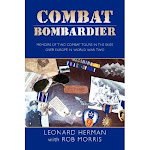
Combat Bombardier: Memoirs of Tour Combat Tours In the Skies Over Europe in World War Two, by Leonard Herman with Rob Morris. Found at http://www.amazon.com/COMBAT-BOMBARDIER-LEONARD-HERMAN/dp/1425761313/ref=pd_bbs_sr_1/104-1823667-6149529?ie=UTF8&s=books&qid=1191983438&sr=1-1
You probably can't afford this one (nor can I) but a great book is Contrails: The 95th Bombardment Group H United States Army Air Forces published in 1945.
Also currently unavailable and rare is Contrails II: A Pictorial History of the 95th Bomb Group (H), 8th United States Army Air Force, Horham, England, 1943-1945
and
Operational Record of the 95th Bomb Group (H) Volume II Supplement to Courage Honor Victory by Paul M. Andrews.
The above three were published by the 95th Bomb Group Association.


This book, which I wrote, contains many good stories about the 95th but is not focused ONLY on the 95th.
http://www.amazon.com/Untold-Valor-Forgotten-Stories-American/dp/1574889990/ref=pd_bbs_sr_1/104-1823667-6149529?ie=UTF8&s=books&qid=1191983235&sr=1-1