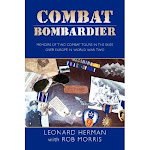
Highly recommended book on the 100th Bomb Group. I know both authors and respect their work greatly. Buy it here on Amazon and read editorial reviews.
Showing posts with label 100th Bomb Group. Show all posts
Showing posts with label 100th Bomb Group. Show all posts
Wednesday, November 11, 2009
High Noon Over Hasseluenne: The 100th BG March 6, 1944
Highly recommended book on the 100th Bomb Group. I know both authors and respect their work greatly. Buy it here on Amazon and read editorial reviews.


Czechs Keep Alive Memories of Battle Over Ore Mountains on September 11, 1944

It never ceases to touch me deeply how Europeans are so much more linked to memories of the air war than Americans and to the extent people will go to preserve the memories of the men who flew the skies in World War Two. The latest example of this is found in the Czech Republic. I became acquainted with a pilot and historian by the name of Michal Holy about a year ago due to our mutual interest in WWII aviation history. Michal put me in touch with a museum in the Czech Republic called The Museum of the Air Battle over the Ore Mountains on 11th September 1944. The museum is located in the town of Kovarska, in the northwest part of Bohemia in the Chomutov district, about 120 km from Prague. The town is nestled up against the German border, a very short distance from the German city of Dresden (it appears to be less than 150 km between them on a map), which explains how the area became a pivotal location in the air war. More on that later. The museum was created in 1997 to honor the veterans--both American and German-- of a classic air battle that raged in the skies over the eastern Czech Republic on September 11, 1944.
The booklet about the battle, written by Dr. Jan Zdiarsky of the Museum, reports that the day started like any other day, and that "the intense thunder of war had so far not touched the mountains that defined the border between Germany and the remnants of Czechoslovakia, but this day was fated to bring the realization that war had come even here. This day saw the meeting of the American 8th Army Air Force and the Luftwaffe in a particularly violent encounter. Only a few minutes of combat produced the loss of over fifty aircraft on both sides."
In fact, casualty figures for this battle run a full four pages in Dr. Zdiarsky's book Black Monday over the Ore Mountains. This book can be ordered by emailing the museum at 517@centrum.cz. To quote the website, "On September 11, 1944, high above the Ore Mountains, on the Czech-German frontier, a formation of B-17 Flying Fortresses of the 100th Bomb Group, 3rd Bomb Division...escorted by P-51 Mustang fighters of the 55th and 339th Fighter Group...clashed with a formation of German Me109 and FW190 intercept fighters of the II. (Sturm) and III. Gruppe Jagdeschwader 4...Due to the furiousness of the combat, most of the shot-down aircraft fell in a very small region of the Czech and German Ore Mountains...This sunny September day entered the history as Black Monday over the Ore Mountains."
Also involved in this battle were aircraft from the 95th Bomb Group (H), though the 95th's losses were much lighter. Michal Holy and Dr. Zdiarsky sent me some pieces from the recovered crash of B-17 42-97334 of the 95th Bomb Group, known as Haard Luck, that crashed during the air battle.
One 100th BG B-17, piloted by Lt. Albert E. Trommer, actually fell on the small town of Kovarska. The plane, 42-102657, came apart over the town and the tail section landed on the roof of the town school, impaling itself into the roof. In the minutes directly after noon, four B-17 bombers from the 100th fell into the town of Kovarska. Most of these planes either broke up in the air or were crippled when the crews bailed out. As a result, 23 of the men on board were killed and only 13 survived to become POWs. Another 10 B-17s fell nearby. The vast majority of the men on these planes also perished. In fact, total losses ran to 52 American airmen KIA. The 100th's 350th Squadron lost all nine planes dispatched, and the 100th as a whole lost one-third of its planes.
The German fighter pilots fought valiently and also suffered losses, though due to the fact that each fighter carried only one man instead of ten, the totals were lower. 21 German fighter pilots were killed in the battle. Losses were high because of the fact that American P-51 Mustangs also joined the battle. The 55th FG lost two pilots killed and one POW.
Total losses, KIA, WIA, or POW ran to 143 Americans and 32 German.
Townspeople tell of the rain of aircraft parts, parachutes, and men from the terrible battle overhead. Many men jumped from low altitude and hit the ground before their chutes could deploy. Men were impaled on trees and one dead airman even landed in a shop on the town's main street. Carnage was everywhere. It was a day that the young children of the town would never forget, and this is perhaps why the town to this day sees this battle as such an important part of its history.
I have only scratched the surface of this amazing story. I highly recommend a visit to the website, which has an English translation as well. It is very easy to navigate and one could spend several hours there. It is also an excellent site for researchers for the 100th BG or for the German researchers of the two Luftwaffe fighter groups involved.
Here is a link to the museum's virtual tour
Here is a link to the museum's Parts Identification Project


Veterans of both the 8th Air Force and the German Luftwaffe meet as friends at the ceremony on September 15, 2007.
Saturday, October 24, 2009
Hardstands
 From the album: "WWII Photos by Lt Jay L Powell" by Charleen Powell-Hill . If you have Facebook, you can view more photos. Photo used with permission.

Hardstand at Horham. Photo by Richard Flagg. Copyright Richard Flagg 2009 and used with permission.
B-17s at air bases in Europe each parked on a hardstand, for the most part. I'm sure there were exceptions. A hardstand was a circular parking area that allowed the B-17 to turn around as needed. The individual hardstands were dispersed around the edges of the perimeter taxi strip, which in turn was connected to the main runways. Often, the aircraft ground crews would erect a tent or other structure so that they could have a warm or dry place to go while working on the aircraft. Sometimes, these crews even slept in them because it was easier than going to their distant barracks.
What got me thinking about hardstands was an excellent aerial photo from British aviation/military photographer Richard Flagg. Richard took this photo of one of the only remaining hardstands at the 95th Bomb Group's base at Horham, Suffolk. I'd been intrigued by them since I walked across one (perhaps the same one?) when I was at Horham in 2008. I tried to imagine a B-17 Flying Fortress towering over me, to hear its engines, and watch as the pilot saluted the ground crewmen as he began his taxi to the runway and another dangerous mission. The hardstand was cracked, and weeds sprouted up betwen the panels. Vibrant red poppies danced in the light breeze, and a steady drizzle fell on the quiet English countryside.
The top photo was sent to me by Charleen Powell-Hill, whose dad was a B-17 pilot in the 100th Bomb Group, stationed at Thorpe Abbotts, Suffolk. The bottom photo is Richard Flagg's photo of the 95th hardstand.
Friday, October 17, 2008
Another Dear Friend Flies Final Mission--Owen Larson, 100th Bomb Group Nav/Bombardier
 My good friend Dr. Owen Larson flew his final mission on September 19, 2007 in Sister Bay, Wisconsin. Owen was a wonderful human being. He gave me so much help when I began research for my first book. Like most WWII vets, he insisted he had done nothing special. Well, I beg to differ. Just scroll down and look at how many missions Owen flew in a B-17 over enemy territory---each mission was tough in its own way--and you'll see he was a hero. Missions to places like Berlin and Warsaw--35 in all--including one of the Shuttle Missions. Owen send me this photo many years ago of himself outside his airplane, "I'll Be Around". That's why I use this plane as my avatar on the site.
Owen, you were a great man. I miss you. Our prayers are with your wife in her time of mourning. Have a safe flight.
The following is Owen's Obituary, which I received in the mail today from his wife.
Larson, Owen E., M.D.
Owen Earl Larson, 87, Sister Bay, ended a courageous battle with cancer on September 19th at his home surrounded by Alice, his wife of 62 years, and their children. Owen was born in Green Bay on Aug. 21, 1921, to Dwayne and Elvira Larson.Owen moved to Appleton when he was in junior high school and graduated from Appleton High School in 1939. He then attended Marquette University until he suspended his studies in 1941 to join the U.S. Air Force. Owen was a bombardier and navigator with the 8th Air Force and flew 35 missions out of England during World War II. He remained in the Air Force Reserve until 1950, when he retired as a 1st Lieutenant. After returning from the war, Owen went back to Marquette University to complete pre-med and medical school on the GI bill, graduating from Marquette Medical School in 1950. He did a rotating internship at Harper Hospital in Detroit, and a partial surgical residency at the VA hospital in Milwaukee. He practiced medicine in Clintonville, Wis., for 12 years and then Theda Clark in Neenah until he returned to Marquette to do a residency in Anesthesiology. Dr. Larson specialized in Anesthesia at Theda Clark until he retired from medicine in 1986. He and Alice then moved to Sister Bay. Owen loved to learn new things. He thoroughly enjoyed becoming proficient at such endeavors as operating a HAM Radio, (call letters K9LWG), playing the piano and the guitar, photography, and painting stunning portraits and landscapes of those he loved, and the places he loved. During his life he was an active participant in The Benevolent Order of the Elks, The American Legion, Veteran's of Foreign Wars, and The Knights of Columbus. He also served as Chief of the Department of Anesthesiology at Theda Clark Hospital in Neenah and was a 50 year member of the State Medical Society. Owen will be remembered for many things. He was a loving husband, father, grandfather, and great-grandfather. In his later years, he was devoted to his grandchildren and great-grandchildren, never missing a birthday or special event in any of their lives. Owen's legacy will be long and fruitful, and will continue to blossom for generations to come in his daughters and sons, his grandchildren and great-grandchildren, and all whose lives he touched, who loved him and will remember him always.
Missions of 1st Lt Owen E.J. Larson
from 100th BG website (compiled by Mike Faley)
1. 11/08/44 Villacoublay
2. 13/08/44 Nantes
3. 14/08/44 Ludwigshaven
4. 24/08/44 Ruhland
5. 25/08/44 Politz
6. 26/08/44 Brest
7. 27/08/44 BERLIN
8. 1/09/44 Mainz
9. 3/09/44 Brest
10. 5/09/44 Stuttgart
11. 13/09/44 Sindelfinger
12. 18/09/44 Warsaw (Second Russian Shuttle)
13. 19/09/44 Szolnok
14. 25/09/44 Ludwigshaven
15. 27/09/44 Mainz
16. 2/10/44 Kassel
17. 3/10/44 Nurnburg
18. 5/10/44 Handorf
19. 6/10/44 BERLIN
20. 7/10/44 Bohlen
21. 12/10/44 Bremen
22. 17/10/44 Cologne
23. 22/10/44 Munster
24. 5/11/44 Ludwigshaven
25. 9/11/44 Saarbrucken
26. 10/11/44 Mainz
27. 21/11/44 Osnabruck
28. 26/11/44 Hamm29.
29/11/44 Hamm
30. 30/11/44 Merseburg
31. 2/12/44 Coblenz
32. 12/12/44 Coblenz
33. 18/12/44 Mainz
34. 24/12/44 Biblis
35. 25/12/44 Kaiserlautern
-end-
Saturday, October 11, 2008
New Google Earth Allows Aerial Tours of 13th Bomb Wing Airfields
 95th Bomb Group Air Field, Horham. In the lower portion of the photo is the tiny village, and in the upper is the main runway and taxiways.
 Above, the 390th Museum at Parham/Framlingham, Suffolk.
 Above, the 100th Bomb Group tower at Thorpe-Abbotts, Suffolk.
I'm enjoying surfing the world with the new, improved GoogleEarth. It's an amazing program, with satellite imagery of literally every spot on the planet. The new version even allows you to swoop down and see the contours of the land and buildings in 3-D.

Above, larger cities like London even get the 3-D building effect.
Above, looking northeast from my neighborhood in Ammon, Idaho.
Monday, June 30, 2008
King Edmund Falls to the Vikings
 The bridge under which Edmund hid, but he was betrayed by a bride passing over the bridge. To this day, wedding parties avoid the bridge as a tradition.
 Another view of the bridge.
 Me at the spot where King Edmund was hung, Hoxne. A tree used to be here.
 Self-explanatory.
 A nearby church commemorates the dastardly deed. King Edmund hides under the bridge. The bride hears him and betrays him.
While visiting in East Anglia, my friends Alan Johnson and James Mutton took me by Bury St. Edmunds and Hoxne, where we saw the bridge where King Edmund was captured and, nearby, the spot where he was killed. Here are some photos I took of this historic area, plus a history of the good king himself.
The 20th of November 869 AD, Saxon King Edmund martyred by the Vikings
Bury St Edmunds, Suffolk
Little is known for sure of the life of the East Anglian king Edmund, but there are many legends associated with him, especially his death and subsequent miraculous events.One story has Saxon Edmund born in Nuremburg, but the most credible stories have him as descended from a line of English Saxon kings, his father being Aethelweard, who died in 854 when Edmund was still a boy of 14. Edmund was said to have been crowned by St Humbert on Christmas day 854, possibly in Bures St Mary in Suffolk.Edmund’s piety is well recorded, seen in his just treatment of his subjects, and in the story that he went into retreat at Hunstanton for a year, during which time he learned the Psalter by heart, a feat that in its day would have been considered a considerable display of learning.But it is Edmund’s death which is the most remarkable element of his life. The Danes in 869 marched south from York through Mercia (the Midlands) and into East Anglia, where they took Thetford and used it as a base. According to one version of the tale Edmund refused to fight them, giving himself up to his enemies in accordance with Christ’s turning the other cheek. In another he engages the Danes in a bloody battle.The stories of Edmund’s death on November 20 869 are various too. Some have him dying in battle. Others, the majority, have him captured by the brutal Ubbe Ragnarsson and Ivar the Boneless. Refusing to renounce his religion Edmund is said to have undergone horrific treatment, either used for target practice by Danish bowmen, or even more horribly made a ‘blood eagle’ sacrifice, his ribs separated from his spine and his lungs pulled from his living body. Yet still he refused to renounce Christ, and was decapitated by the Danes in exasperation. Edmund’s head was said to have been guarded by a wolf for weeks before his followers recovered it, a story that lead to his being the patron saint of wolves, although whether they knew this before they were wiped out in England is unclear.After his death Edmund quickly became accepted as a saint and a martyr. His body when seen years after his death was intact and without signs of decay, and even more miraculously was healed of its wounds, only a thin red line around his neck showing the brutality of his end. Miracles were attributed to him, including one where his spirit appeared to the last heathen Danish king in England, Sweyen, causing the latter to fall from his horse and die in convulsions.His shrine at Beadoriceworth became an important point of pilgrimage in early medieval England, the town changing its name to Bury St Edmunds (town of St Edmund). For a time St Edmund was England’s patron saint, until St George replaced him, and there is a campaign afoot today to reinstate the martyr king to that position.
Little is known for sure of the life of the East Anglian king Edmund, but there are many legends associated with him, especially his death and subsequent miraculous events.One story has Saxon Edmund born in Nuremburg, but the most credible stories have him as descended from a line of English Saxon kings, his father being Aethelweard, who died in 854 when Edmund was still a boy of 14. Edmund was said to have been crowned by St Humbert on Christmas day 854, possibly in Bures St Mary in Suffolk.Edmund’s piety is well recorded, seen in his just treatment of his subjects, and in the story that he went into retreat at Hunstanton for a year, during which time he learned the Psalter by heart, a feat that in its day would have been considered a considerable display of learning.But it is Edmund’s death which is the most remarkable element of his life. The Danes in 869 marched south from York through Mercia (the Midlands) and into East Anglia, where they took Thetford and used it as a base. According to one version of the tale Edmund refused to fight them, giving himself up to his enemies in accordance with Christ’s turning the other cheek. In another he engages the Danes in a bloody battle.The stories of Edmund’s death on November 20 869 are various too. Some have him dying in battle. Others, the majority, have him captured by the brutal Ubbe Ragnarsson and Ivar the Boneless. Refusing to renounce his religion Edmund is said to have undergone horrific treatment, either used for target practice by Danish bowmen, or even more horribly made a ‘blood eagle’ sacrifice, his ribs separated from his spine and his lungs pulled from his living body. Yet still he refused to renounce Christ, and was decapitated by the Danes in exasperation. Edmund’s head was said to have been guarded by a wolf for weeks before his followers recovered it, a story that lead to his being the patron saint of wolves, although whether they knew this before they were wiped out in England is unclear.After his death Edmund quickly became accepted as a saint and a martyr. His body when seen years after his death was intact and without signs of decay, and even more miraculously was healed of its wounds, only a thin red line around his neck showing the brutality of his end. Miracles were attributed to him, including one where his spirit appeared to the last heathen Danish king in England, Sweyen, causing the latter to fall from his horse and die in convulsions.His shrine at Beadoriceworth became an important point of pilgrimage in early medieval England, the town changing its name to Bury St Edmunds (town of St Edmund). For a time St Edmund was England’s patron saint, until St George replaced him, and there is a campaign afoot today to reinstate the martyr king to that position.
More English Air Base Photos
 Road to Bomb Dump, Horham. (Most of these photos will supersize if you double-click them. You'll get a lot more detail.)
 95th Bomb Group Hospital, Horham.
 Perimeter Taxiway, Horham.
 34th BG Indian on Bomb, a piece of wall removed and displayed at the 95th Museum.
 Singing farmer, on display at 390th Base.
 'Tony' Anthony, (L) who was an RAF officer at Horham during the war, poses with his beautifully restored American staff car. My good friend Alan Johnson, whom I stayed with in Horham, is at right.
 Inside a bomb shelter, Horham.
 Hospital CO's office, 95th BG Base Hospital, Horham.
 Old 100th buildings, Thorpe Abbotts.
 100th Bomb Group hut.
 390th Bomb Group Theater.
 390th Bomb Group Tower.
 100th Bomb Group Operations Office.
 Bomb Shelter.
Friday, March 14, 2008
8th Air Force Legend Thomas Jeffrey Flies Final Mission

One of the truly great men of the American air war over Europe in WWII is Thomas Jeffrey. Every man I've ever talked with that served under this gentleman loved him. I'm saddened to learn of Gen. Jeffery's passing. Mike Faley, one of the historians of the 100th Bomb Group, posted this post today:
General Thomas S. Jeffrey Jr. has passed away
by Michael Faley on Fri Mar 14, 2008 2:07 pm
It is my sad duty to inform the 100th Bomb Group Foundation the Gen Thomas S. Jeffrey has passed away at the age of 91. As Deputy Group Commander of the 390th Bomb Group he was instrumental in the formation, training, and deployment of the Group to England. He was the 390th's Command Pilot on the Schweinfurt mission "Black Thursday" October 14, 1943 for which the group received it second Distinguished Unit Citation. In May of 1944, Gen Jeffrey took over command of the 100th Bomb Group (The Hard Luck Group) and implemented procedures and discipline that made the 100th BG one of the best groups in the ETO. His leadership before during and after the War were inspiring to those who served under him and those who only had the pleasure of knowing him through our reunions. Our Condolences go our to Ann and Tom Jeffrey and we wish Gods speed. To read up more on General Jeffrey, please go to this page on our website. http://www.100thbg.com/mainpages/crews/crews6/jeffrey_t.htmhttp://www.390th.org/warstories/Jeffrey.htm. Below is a letter from Gen. Jeffrey to the 100th BG that he sent last fall:
"(September 2007)Greetings! Best wishes to the 100th Bomb Group reunion attendees! Wish I could be here to swap tall tales!We are still hanging in here. We're ALL hanging in here; we're all still here, some just floating a little higher than before. As the old song says “…You take her up and spin her, and with an awful tear, your ship folds up, your wings fall off, but you will never care, for in two minutes max another pair you'll find… and dance with Pete and the angels sweet, and you will never mind.” Well, never mind this old age stuff. We'll get through it, we always have. We're tough, made of strong fiber and all of my colleagues of yesteryear proved it – showed what they were made of. We're all steadily turning over the great 100th Bomb Group Foundation to younger members with new ideas, a fresh outlook, and a desire to be a part of it. And that is as it should be. The proud tradition carries on. And we are pleased.Thank you for carrying on, thank you for cataloging the history, and keeping the memories alive. I raise my glass to you all!Maj. General Thomas S. Jeffrey Jr.Commanding Officer100th Bomb Group (H)
---Michael P. Faley 100th Bomb Group Historian 100th Bomb Group Photo Archivist 13th Combat Wing Historian
Michael Faley
---Michael P. Faley 100th Bomb Group Historian 100th Bomb Group Photo Archivist 13th Combat Wing Historian
Michael Faley
Sunday, December 16, 2007
An Overdue Wyoming Tribute

As a former resident of the great state of Wyoming, which remains the best place I've ever lived, I was saddened to receive a letter a few weeks ago from Scott Nelson, a farmer/rancher/aviation artist from North Dakota, who became friends with the late Gale 'Buck' Cleven, of the 100th Bomb Group.
Scott wrote me: "When Buck passed away in Sheridan, Wyoming, I tried to get the papaer there to run an obituary on him--Buck always considered himself as a Wyoming native and I thought it would be nice if the state would recognize him. No luck. Guess they figured he wasn't 'important' enough.
I then contacted the small Lemmon, South Dakota paper and they thought it was very important and they ran it, with some errors. This is the only obituary run of Buck that I know of--unfortunately, this small paper is not on the AP wire so the story went no further."
Time to rectify that situation, Scott. What follows is the obituary for Dr. Gale W. 'Buck' Cleven in its entirety, though it may take me a while to type it all. Because, Buck, you were and are an American hero and you deserve it.
'Dr. Gale W. 'Buck' Cleven passed from this life on November 17, 2006. Born December 27, 1919 in the Lemmon (SD) area, he moved to the Casper, Wyoming area where he worked on drilling crews and worked his way through the University of Wyoming. Dr. Cleven received degrees from Harvard and his geological doctorate degree at George Washington University. Dr. Cleven led a very accomplished life including fighting in three wars (WWII, Korea, and Vietnam), held a post at the Petnagon and was in charge of EDP information at Hughes Aircraft. Later, Dr. Cleven reorganized staffing and leadership at Webber University in Florida. Dr. Cleven retired in Dickinson, North Dakota and later at the Sugarland Ridge Retirement Center in Sheridan, Wyoming, where he resided until his death.
There are several books and web site postings of Buck's service in WWII including Masters of the Air: America's Bomber Boys who Fought the Air War Against Nazi Germany. In Masters of the Air, author Donald Miller credits Cleven, Eighth Air Force Squadron Commander, for giging the 100th Bomb Group its personality. Miller's book retells Major Cleven's story: 'On October 8, 1943, Major Buck Clevens (sic) was shot down over Bremen by three Luftwaffe fighters when they flew out of the sun and tore into his fortress, knocking out three engines, blowing holes in the tail and nose, sheering of a good part of the left wing. The situation hopeless, Cleven ordered the crew to jump. He was the last man out of the plane. When he jumped the bomber was only about 2,000 feet from the ground. Hanging from his parachute, Cleven saw he was going to land near a small farm house. He spun out of control and went flying through the open back door and into the kitchen, knocking over furniture and a small iron stove. The farmer's wife and daughter began screaming hysterically and, in a flash, the farmer had a pitchfork pressed against Cleven's chest. 'In my pitiful high school German I tried to convince him I was a good guy. But he wasn't buying it.'
Buck was taken to a prison camp where he spent about 18 months before escaping to Allied lines. Cleven escaped while being marched to Moosburg's Stalag VIIA. Among his many accomplishments during his time of service, Buck earned a Distinguished Service Cross, and Silver Star, Bronze Star. The DFC was for his heroic participation in the 'double-strike' of Regensburg and Schweinfurt on August 17, 1943. Sixty bombers and almost 600 men were lost. The aircraft factories and ball bearing plants were being guarded by the most formidable aerial defenses in the world at the time. Cleven was in the vulnerable low squadron--so called the Coffin Corner, the last and lowest group in the bomber stream. Cleven's plane was being shredded by enemy fighters. Cleven's co-pilot panicked and prepared to bail out. Cleven ordered his co-pilot to stay put. His words were heard over the interphone and had a magical effect on the rest of the crew. They stuck to their guns. His actions that day at Regensburg were said to 'electrify the base'. Lt. Col. Bierne Lay (who would later write the famous 'Twelve O'Clock High) recommended Cleven for a Medal of Honor. This was downgraded to a DFC, but Cleven never went to pick up the medal, claiming he didn't deserve it. He was quoted as saying, "Medal, hell, I needed an aspirin".
More history of Dr. Cleven's leadership at Hughes Aircraft is detailed in The King and the Seven Dwarfs, by Barney Oldfield.
Dr. Cleven is survived by his wife Lee Cleven of Ooltwah, TN, his sister Doris Shaw and one nephew of Dallas, TX. He was proceeded in death by his first wife Marge Cleven. His remains were laid to rest in Sante Fe, New Mexico."
Rest in peace, Buck. Wyoming honors you.
Wednesday, December 12, 2007
Remembering Gale 'Buck' Cleven, 100th Bomb Group
 In artist Scott Nelson's painting, Gale Cleven mans the left seat as his plane goes down over Germany and his crewmates bail out.
I recently bought an outstanding art print by North Dakota artist Scott Nelson. Scott knew 100th Bomb Group commander Gale 'Buck' Cleven quite well through a mutual friend, and Mr. Cleven told Scott his story. Scott in turn made a painting of the shooting down of Cleven's B-17, which was made into a limited edition print and signed by both.
When Scott sent me this print, he also sent more information about Mr. Cleven. As a former Wyoming resident with strong ties to the state, I was suprised to learn that Cleven was a Wyoming native, from the Sheridan area. And I was disturbed to find that when Scott sent the Wyoming papers an obituary about the passing of this great WWII veteran, none of the Wyoming papers ran the obituary, ostensibly because they had never heard of him and didn't think the obit was of any interest.
As a former Wyomingite, I am going to try to rectify this great wrong to a good man by running his story here. I will be adding the obituary Scott wrote in a day or so, plus more photos of Mr. Cleven.

GALE W. "BUCK" CLEVEN
GALE W. "BUCK" CLEVEN
ORIGINAL 100TH PILOT
350TH BOMB SQUADRON
COMMANDING OFFICER
ORGINAL 350TH SQ COMMANDER
WENT OVERSEAS WITH CREW #A-3 IN AC #42-29738. POW 8 OCT 43 BREMEN (INFO ON MISSION BELOW). ESCAPED AND RETURNED TO THORPE ABBOTS APRIL 1945, STANDARD PROCEDURES PROHIBITED HIS RETURN TO OPERATIONS.

Medals:Distinguished Service Cross- Sept. 10, 1943 for Regensburg Mission August 17, 1943 Distinguished Flying Cross- Nov 30, 1943 for Paris Mission Sept 3, 1943 Air Medal-Aug 6, 1943 OLC to Air Medal-Aug 22, 1943 OLC to Air Medal-Sept 24, 1943 OLC to Air Medal-Oct 20, 1943 Major Gale Cleven passed away on Nov 17, 2006 at the age of 87 years old.
-end-
Sunday, November 11, 2007
Robert 'Rosie' Rosenthal DVD: From Brooklyn to Berlin: A Review

I just finished watching the DVD entitled 'Robert 'Rosie' Rosenthal: From Brooklyn to Berlin' about the 100th Bomb Group's beloved command pilot. The film, produced by the Jewish-American Hall of Fame, is a one-hour interview with Mr. Rosenthal in 2005, less than two years before he flew his final mission this year.
Rosie was one of the great heroes of the war. He was selfless, flying three tours of duty over Europe. He was courageous, shot down twice, wounded twice, and once ending up in a Russian hospital. He was a man who led by his own quiet demeanor of honesty, integrity and duty, and the men of the 100th Bomb Group loved him.
 Gil Cohen's painting of Rosie and his Riveters. The crew was the only 100th Crew to return from Munster.
 In his final letter to me back in 2001, he said, in part: "I have received more than my share of recognition. There were so many aviators who served in the Air Corps, who have been overlooked and whose stories deserve to be told". He then directed me to Jerome Jacobson, a 15th BG lead navigator who ended up being an important contact for my book, Untold Valor.
The DVD about Rosie is available for only $15.00, including postage, from the Jewish-American Hall of Fame at the following address:
Jewish-American Hall of Fame
5189 Jeffdale Ave.
Woodland Hills, CA 91364
The director, Mr. Mel Wacks, is in charge of the endeavor for the non-profit organization. This is a superb DVD in all regards, one you will treasure.
For more on Rose from the Hall of Fame, go to:
The photo below shows the DVD along with the final letter I received from Rosie.
Saturday, September 29, 2007
More Info on Robert 'Rosie' Rosenthal

100th Bomb Group pilot Robert 'Rosie' Rosenthal flew over fifty missions over Europe in World War Two. Earlier this year, Rosenthal flew his final mission. Rosie was a great man in the Air Corps and a great asset to humanity in general.
I knew Rosie only slightly. When I tried to get his story in an interview, he demured, telling me he'd had way more than his share of publicity and directing me to another fine Jewish aviator, navigator Jerome Jacobson. I think Rosie got tired of and embarrassed by the attention he garnered, but the bottom line is that his story is so compelling that it is well worth repeating here.
I heard today from Mr. Mel Wacks, the director of the Jewish-American Hall of Fame. Mel wrote me to let me know that there is a new DVD about the life of Rosie Rosenthal. It is available from the Jewish-American Hall of Fame at the f0llowing address, for the nominal fee of fifteen dollars: Jewish-American hall of Fame, 5189 Jeffdale Ave., Woodland Hills, CA 91364.
I plan to order a copy this week, and I highly recommend it to all readers. A few of my friends saw it at the 100th BG reunion last month, and said it was outstanding.
What follows is a little background on Robert Rosenthal.
Robert "Rosie" Rosenthal (1917-2007)
The day after Pearl Harbor was attacked, Robert "Rosie" Rosenthal enlisted in the U.S. Army. In August 1943, he joined the 418th Squadron of the "Bloody" 100th Bombardment Group, stationed in England. Thirteen B-17s took off for a bombing mission over Munster … but only one returned - aptly named "Rosie's Riveters" - full of holes and flying on two engines. But in spite of the intercom being out, the oxygen system shot-up and a large ragged hole in the skin of the right wing, they had successfully dropped their bombs over the target.
In March, 1944 Rosie's Riveters completed its 25th mission, which completed their military service. But Rosie reenlisted, saying "I had to do what I could for as long as I was able." This was in spite of the fact that 15 missions was the average life of a bomber crew. Later, Rosenthal was made head of the 350th Squadron after the CO was shot down. Intelligence Officer Marvin Bowman found Rosenthal "one of the great figures of the Air Force; a shy, modest, and patriotic gentleman of truly amazing courage and achievement."
When Rosenthal's plane went down over Germany in September, he broke his arm and nose - but luckily was rescued by the Free French, to whom he had dropped supplies only a few weeks before. As soon as his arm had healed, Rosie returned to his original (418th) Squadron, and was chosen to lead a mission to Berlin on February 3, 1945. Even after a direct flak hit put an engine on fire, his blazing Fortress still managed to drop its bombs on the targeted Erkner factory before Rosenthal gave the signal to "Abandon ship." The rest of the crew parachuted and after B-17 had descended to about 1,000 feet, Rosenthal was the last to leave with the ground dangerously close … just before the ship exploded. Fortunately, he was found by Russians, who embraced him and took him to a hospital. This was his 52nd mission; there was to be just one more. Rosie flew his last mission after VE-Day … to free prisoners from concentration camps.
Rosenthal was one of the most decorated pilots in the Eighth Air Force. He received 16 decorations, including the Distinguished Service Cross for "extraordinary heroism in connection with military operations against the enemy," the Silver Star (with cluster) for "gallantry in action," the Distinguished Flying Cross (with cluster) for "heroism or extraordinary achievement during aerial flight," the Air Medal (with seven clusters), the Purple Heart (with cluster), plus the British Distinguished Flying Cross and the French Croix de Guerre.
Shortly after V-E Day, Rosenthal was back in Germany as an assistant to the United States Prosecutor at the Nuremberg Trials where, among other things, he interrogated Nazi leader Hermann Goering.
 Robert 'Rosie' Rosenthal is shown (above right) with aviation artist Gil Cohen with the oil original of Cohen's painting showing Rosie and his crew before a 1943 mission. Shown are (left to right): Waist Gunner S/Sgt. Loren Darling, Pilot 1st Lt. Robert Rosenthal, Radio Operator T/Sgt. Michael Boccuzzi, and Waist Gunner S/Sgt. James Mack.
 Wednesday, September 12, 2007
100th Bomb Group Holds Reunion in Nashville
 A great-looking group of guys---veterans of the 100th Bomb Group, pose for a group photo at their annual reunion in Nashville, Tennesse last week.
The 100th Bomb Group (H) held its annual reunion last week in Nashville, Tennessee. Joe O'Leary, son of a 100th BG airman, took many excellent photos of the reunion, and I asked permission to share them on this blog. Joe generously agreed. Here is the link for this slideshow. Enjoy!
http://www.kodakgallery.com/ShareLandingSignin.jsp?Uc=gkuknur.4hr1s42n&Uy=d9i7tl&Upost_signin=Slideshow.jsp%3Fmode%3Dfromshare&Ux=0&UV=546196637268_654534144111
My friend Les Poitras also attended, flying to the reunion with a crewmate of his late grandfather. Les had a wonderful time.
http://www.kodakgallery.com/ShareLandingSignin.jsp?Uc=gkuknur.4hr1s42n&Uy=d9i7tl&Upost_signin=Slideshow.jsp%3Fmode%3Dfromshare&Ux=0&UV=546196637268_654534144111
My friend Les Poitras also attended, flying to the reunion with a crewmate of his late grandfather. Les had a wonderful time.
 My friend Les Poitras with Fortunato Carello, 350th Squadron Navigator, at the reunion.
After returning, Les got an email from the old commanding officer of the 390th and later the 100th, Thomas Jeffrey, who did not attend the reunion but was obviously with the vets and their families in spirit. Gen. Jeffrey writes:
 Gen. Thomas Jeffrey, commander of the 100th Bomb Group, 1944.
"Greetings! Best wishes to the 100th Bomb Group reunion attendees! Wish I could be here to swap tall tales!
We are still hanging in here. We're ALL hanging in here; we're all still here, some just floating a little higher than before. As the old song says ".You take her up and spin her, and with an awful tear, your ship folds up, your wings fall off, but you will never care, for in two minutes max another pair you'll find. and dance with Pete and the angels sweet, and you will never mind." Well, never mind this old age stuff. We'll get through it, we always have. We're tough, made of strong fiber and all of my colleagues of yesteryear proved it - showed what they were made of. We're all steadily turning over the great 100th Bomb Group Foundation to younger members with new ideas, a fresh outlook, and a desire to be a part of it. And that is as it should be. The proud tradition carries on. And we are pleased.
Thank you for carrying on, thank you for cataloging the history, and keeping the memories alive.
I raise my glass to you all!
Maj. General Thomas S. Jeffrey Jr.
Commanding Officer
100th Bomb Group (H)"

Monday, July 23, 2007
Lest We EVER Forget
 John F. Ryan Crew (left to right)Back: James F. Healy (BTG), George Sherback (ROG), Harold Whipple (RWG), Marv Fenner (TTE), Archie McFarland (LWG)Front: Joseph Tobiczyk (CP), John Ryan (P), Carl McGinty (BOM)Missing: Hans Chorpenning (NAV), Elmer Andersen (TG) (Source: 100th BG Photo Archives)
My good friend Les just sent me this gut-wrenching photo of a young crew who went down with the 100th Bomb Group on the crew's very first mission. All but one were killed in action. Sherback was the only survivor. Their names are listed on the Wall of the Missing in Cambridge. All bodies and debris ended up in the sea.
These young men had their whole lives ahead of them. Their girlfriends married other men. They never had children. They never had the joy of watching their kids grow up, or the pleasures of old age. They are forever young, forever idealistic and smiling.
Les writes: "One of the hard parts about doing the website work for the 100th is that there are so many KIA's and pictures of them. It's very sobering. All of them look so young, handsome and brave. There's no way they deserved their fate. I've mentioned this before, but this particular crew photo always gets to me. All but one, KIA on their FIRST mission.
They all must be in a very special place in heaven."
They all must be in a very special place in heaven."
God forgive us if we ever forget them.

The link for this crew is found at http://www.100thbg.com/mainpages/crews/crews3/ryan.htm
Subscribe to:
Posts (Atom)